My alma mater has hired another young and bright economic historian from U of Pittsburg according to Peter Boettke over at Austrian Economists. His name is W. Troesken and here is his CV.
A couple of years ago I have read his piece "The Letters of John Sherman and the Origins of Antitrust" published in Review of Austrian Economics and I am impressed with his work ever since.
Joined by recent new hires like Gary Richardson and John Nye (which I have talked about in this post) George Mason is soon turning itself into "the" place to go if one wants to become an economic historian!
Monday, March 19, 2007

More Sex is Safer Sex !

Steve Landsburg's new book is out! The title of the new book is, yes, you get it right: "More Sex is Safer Sex."
Here is an advance praise from another Steve of Freakonomics fame:
"Steve Landsburg proves once again that he is better than anyone else at making economics interesting to noneconomists. Landsburg is provocative and playful in his mission to demonstrate how an understanding of economics will change the way you live your daily life. I loved this book."
Here is more info about the book.
Competition "Law" is Not Really a Law
Today's edition of SCMP reported that:
"A cross-sector competition law is to be introduced to regulate seven anti-competitive practices, while exemptions will be given to parties with less than a 20 per cent market share, sources from the government and Democratic Party say.
Seven anti-competitive practices - price-fixing, bid-rigging, market allocation, sales and production quotas, joint boycotts, unfair or discriminatory standards, and abuse of dominant position - will be covered by the law."
Read more here.
Why I have put quotation marks on the word "law" above? Hayek has defined law in many occasions that it is a set of rules of conduct equally applicable to all. Apparently, such will not be the case for our, eh, competition "law"!
"A cross-sector competition law is to be introduced to regulate seven anti-competitive practices, while exemptions will be given to parties with less than a 20 per cent market share, sources from the government and Democratic Party say.
Seven anti-competitive practices - price-fixing, bid-rigging, market allocation, sales and production quotas, joint boycotts, unfair or discriminatory standards, and abuse of dominant position - will be covered by the law."
Read more here.
Why I have put quotation marks on the word "law" above? Hayek has defined law in many occasions that it is a set of rules of conduct equally applicable to all. Apparently, such will not be the case for our, eh, competition "law"!
Thursday, March 15, 2007
Where Are the Economists?
First we have the lawyers who hijack the whole debate on whether HK should have a competition law, now marketing experts join in.
According to a story in SCMP:
"A Chinese University academic has called for the introduction of a cross-sector competition law after a survey found Hong Kong retailers, especially supermarkets, abused their market power with suppliers.
The survey of 121 suppliers by the university's marketing department found many retailers dictated prices and demanded exclusivity...
Supermarkets were found responsible for an overwhelming majority of the unfair practices by retailers. About 70 per cent of the disadvantaged suppliers were found to have a supermarket as their major retailer...
Professor Sin said a cross-sector competition law was needed to ensure fair play between suppliers and retailers."
Read more here.
Not so fast professor Sin. For your argument to go through, you have to assume that the supermarkets/retailer do not pass on the savings that they get from squeezing the suppliers. If they do, consumers win at the end. And what's the problem with that?
To argue that the retailers are the ones who would buy low (from suppliers) and sell high (to consumers), you have got to show that the retailing industry is not competitive. That of course is a completely different issue which your research simply does not address! Why the rush to conclude that HK needs a competition law then?
Going back to your original thesis, suppliers being squeezed by retailers, if indeed the suppliers feel that they are being squeezed by retaliers, why don't they simply refuse to supply them and set up their own retail outlets through vertical integration? Why complain?
And for those who question the rationale of slotting fees, I strongly recommend them to read the paper by UCLA economist Ben Klein and George Mason University law professor Joshua Wright which you could access here.
BTW, where are HK's economits? Why they are silent on the topic which they should have a lot to say?
According to a story in SCMP:
"A Chinese University academic has called for the introduction of a cross-sector competition law after a survey found Hong Kong retailers, especially supermarkets, abused their market power with suppliers.
The survey of 121 suppliers by the university's marketing department found many retailers dictated prices and demanded exclusivity...
Supermarkets were found responsible for an overwhelming majority of the unfair practices by retailers. About 70 per cent of the disadvantaged suppliers were found to have a supermarket as their major retailer...
Professor Sin said a cross-sector competition law was needed to ensure fair play between suppliers and retailers."
Read more here.
Not so fast professor Sin. For your argument to go through, you have to assume that the supermarkets/retailer do not pass on the savings that they get from squeezing the suppliers. If they do, consumers win at the end. And what's the problem with that?
To argue that the retailers are the ones who would buy low (from suppliers) and sell high (to consumers), you have got to show that the retailing industry is not competitive. That of course is a completely different issue which your research simply does not address! Why the rush to conclude that HK needs a competition law then?
Going back to your original thesis, suppliers being squeezed by retailers, if indeed the suppliers feel that they are being squeezed by retaliers, why don't they simply refuse to supply them and set up their own retail outlets through vertical integration? Why complain?
And for those who question the rationale of slotting fees, I strongly recommend them to read the paper by UCLA economist Ben Klein and George Mason University law professor Joshua Wright which you could access here.
BTW, where are HK's economits? Why they are silent on the topic which they should have a lot to say?
Wednesday, March 14, 2007
The Story of Joseph Schumpeter

Harvard's Thomas McCraw has a new book on Schumpeter called Prophet of Innovation published by Harvard U Press. It's over 700 hundred pages long!
Edmund Phelps, 2006 Nobel Lauerate in economics called the book "a truly penetrating biography of the most influential theorist of finance capitalism."
Tuesday, March 13, 2007
Avoid Marginalization Through Competition
Today's edition of The Standard reported on the warnings sounded out by National People's Congress vice chairman Cheng Siwei:
"Like the fabled hare being overtaken by a tortoise, Hong Kong risks losing its position as a international financial center if it sticks to its "old ways," National People's Congress vice chairman Cheng Siwei warned Tuesday in Beijing...
"If Hong Kong people focus on internal political rows but not economic development, they will be marginalized," Cheng told a media briefing less than two weeks before the SAR's March 25 chief executive election."
Read more here.
It is ultimately a time allocation problem, isn't it? If you devote more time to work on political matters, you have less time left to deal with economic issues. But then in economics, we talk about choice at the margin. That is, every one in HK is calculating whether spending one more unit of time in political activities brings higher benefit than other activities. Throw in different preferences, different opportunities confronting different people, it seems unlikely most of HK's working population would devote most of their time to political activities. Therefore, the outcome Mr. Cheng talked about would be an unlikely one.
If one were to worry about HK being marginalized, there is another consideration which is far, far more important in my opinion. That is Beijing's attempt to limit the growth opportunities of mainland cities in order to "enhance" HK's role as our country's premier interntational financial center.
In a market economy, you don't get assigned to such role, you earn it through beating your rivals in the market place. Horning HK's competitive edge through vigorous competition with other mainland cities and other global ones is the only route for HK to stay ahead. However, this is not happening, as I talked about in a previous post.
"Like the fabled hare being overtaken by a tortoise, Hong Kong risks losing its position as a international financial center if it sticks to its "old ways," National People's Congress vice chairman Cheng Siwei warned Tuesday in Beijing...
"If Hong Kong people focus on internal political rows but not economic development, they will be marginalized," Cheng told a media briefing less than two weeks before the SAR's March 25 chief executive election."
Read more here.
It is ultimately a time allocation problem, isn't it? If you devote more time to work on political matters, you have less time left to deal with economic issues. But then in economics, we talk about choice at the margin. That is, every one in HK is calculating whether spending one more unit of time in political activities brings higher benefit than other activities. Throw in different preferences, different opportunities confronting different people, it seems unlikely most of HK's working population would devote most of their time to political activities. Therefore, the outcome Mr. Cheng talked about would be an unlikely one.
If one were to worry about HK being marginalized, there is another consideration which is far, far more important in my opinion. That is Beijing's attempt to limit the growth opportunities of mainland cities in order to "enhance" HK's role as our country's premier interntational financial center.
In a market economy, you don't get assigned to such role, you earn it through beating your rivals in the market place. Horning HK's competitive edge through vigorous competition with other mainland cities and other global ones is the only route for HK to stay ahead. However, this is not happening, as I talked about in a previous post.
Monday, March 12, 2007
Democracy and Growth
MIT's Daron Acemoglu and Harvard's Ed Glaeser blog about democracy and growth over at the WSJ blog, read more here.
Shanghai Deserves Equal Treatment
Today's SCMP reports:
"The central government aims to take further steps to reinforce Hong Kong's role as an international financial centre, signalling its intention to highlight the city's importance to China's economy ahead of the 10th anniversary of the handover.
Analysts saw Beijing's efforts to promote Hong Kong's role as a setback for Shanghai, whose leadership has been hit by a series of corruption scandals culminating in the sacking of its former party secretary, Chen Liangyu ...
It is expected to announce more favourable policies soon, probably before the July 1 handover anniversary...
"The conclusion to the decade-long debate on the role between the twin cities has become clear now. Hong Kong, with its existing advantages, should serve China internationally, while Shanghai, with its limitations, should focus on serving the domestic market," Professor Zhong said. "
Read more here.
My response is, why shouldn't Shanghai be allowed to compete with HK? If Shanghai's legal framework and other institutions are inadequate to serve as China's international financial centre at this point in time, wouldn't it be more productive to speed up their development rather than condemn it to an insignificant role.
Why HK's is so worry about Shanghai? Afterall, it competes quite successfully with world gaints like London and New York, why it fears to compete with Shanghai?
Actually it is not correct to say HK is competing with Shanghai. As long as China has the ability to grant favorable policies to HK but not to Shanghai, the playing field is tilted even before the game begins.
"The central government aims to take further steps to reinforce Hong Kong's role as an international financial centre, signalling its intention to highlight the city's importance to China's economy ahead of the 10th anniversary of the handover.
Analysts saw Beijing's efforts to promote Hong Kong's role as a setback for Shanghai, whose leadership has been hit by a series of corruption scandals culminating in the sacking of its former party secretary, Chen Liangyu ...
It is expected to announce more favourable policies soon, probably before the July 1 handover anniversary...
"The conclusion to the decade-long debate on the role between the twin cities has become clear now. Hong Kong, with its existing advantages, should serve China internationally, while Shanghai, with its limitations, should focus on serving the domestic market," Professor Zhong said. "
Read more here.
My response is, why shouldn't Shanghai be allowed to compete with HK? If Shanghai's legal framework and other institutions are inadequate to serve as China's international financial centre at this point in time, wouldn't it be more productive to speed up their development rather than condemn it to an insignificant role.
Why HK's is so worry about Shanghai? Afterall, it competes quite successfully with world gaints like London and New York, why it fears to compete with Shanghai?
Actually it is not correct to say HK is competing with Shanghai. As long as China has the ability to grant favorable policies to HK but not to Shanghai, the playing field is tilted even before the game begins.
Wednesday, March 07, 2007
Bidding Farewell to Laissze Faire in HK
In the HK Standard today:
" In an unprecedented move, the government announced Wednesday it will invest directly in movie productions to back Hong Kong's ailing film industry. Officials hope direct investment from the HK$300 million film development fund announced by Financial Secretary Henry Tang Ying-yen in his budget speech last week will bring about a revival to the industry that a senior official has described as "very important."..."
Rationale for the policy, according to Secretary for Commerce, Industry and Technology Joseph Wong:
"First of all, the film industry, is a very important creative industry in Hong Kong and [its] revival will have a lot of spill-over effects." Secondly, he argued, there are also many examples of governments playing a "more active part" in supporting film industries in France, the United Kingdom, Singapore and South Korea."
Read more here.
Yo Joe, please name one industry which does not generate spillover effects, externalities, third-party effects...or whatever fancy name you can come up with?
Oh yeah, Joe, on your second point, would you please explain to me why whatever policies other countries have implemented must be a good thing? Could they all be wrong at the same time? They might not, but we, as taxpayers who pay for the final bill, deserve an explanation not an assertion. Wouldn't you agree?
And would you please also info us Joe, what criteria you would use when deciding which movie deserves government dole ? And who has the final say when picking a particular set of criteria for such purpose in the first place?
" In an unprecedented move, the government announced Wednesday it will invest directly in movie productions to back Hong Kong's ailing film industry. Officials hope direct investment from the HK$300 million film development fund announced by Financial Secretary Henry Tang Ying-yen in his budget speech last week will bring about a revival to the industry that a senior official has described as "very important."..."
Rationale for the policy, according to Secretary for Commerce, Industry and Technology Joseph Wong:
"First of all, the film industry, is a very important creative industry in Hong Kong and [its] revival will have a lot of spill-over effects." Secondly, he argued, there are also many examples of governments playing a "more active part" in supporting film industries in France, the United Kingdom, Singapore and South Korea."
Read more here.
Yo Joe, please name one industry which does not generate spillover effects, externalities, third-party effects...or whatever fancy name you can come up with?
Oh yeah, Joe, on your second point, would you please explain to me why whatever policies other countries have implemented must be a good thing? Could they all be wrong at the same time? They might not, but we, as taxpayers who pay for the final bill, deserve an explanation not an assertion. Wouldn't you agree?
And would you please also info us Joe, what criteria you would use when deciding which movie deserves government dole ? And who has the final say when picking a particular set of criteria for such purpose in the first place?
Transaction Cost Economics: An Introduction
A paper of the same title by one of the TCE's pioneers Oliver Williamson.
Serendipity
Have you ever had the following experience. You go to the bookstore, not knowing exactly what you want to get. Then, just when you are pretty sure you are not going to get anything on this trip. You see something. A book is sitting at that corner of the bookshelf which usually no one will ever bother to check. There, you find your book of the day, book of the month may be, or may be a book which will change your perspective for the rest of your life.
I had that experience the other day...I found this book called The Difference by Scott Page.
No amount of internet search has enabled me to discover this book, and I perform that kind of internet search every single day.
Here is a blurb on the book by Nassim Nicholas Taleb, author of Fooled by Randomness and The Black Swan:
"Another highlight of 2006 was to find in my mailbox The Difference by Scott Page. Page examines the effect of cognitive diversity on problem solving and shows how diversity acts like an engine for tinkering. It works like evolution. By subverting the big structures we also get rid of the Platonified one way of doing things. This is a landmark book."
I had that experience the other day...I found this book called The Difference by Scott Page.
No amount of internet search has enabled me to discover this book, and I perform that kind of internet search every single day.
Here is a blurb on the book by Nassim Nicholas Taleb, author of Fooled by Randomness and The Black Swan:
"Another highlight of 2006 was to find in my mailbox The Difference by Scott Page. Page examines the effect of cognitive diversity on problem solving and shows how diversity acts like an engine for tinkering. It works like evolution. By subverting the big structures we also get rid of the Platonified one way of doing things. This is a landmark book."
Thursday, March 01, 2007
Simon Johnson, IMF's Next Chief Economist?

WSJ reported that Simon Johnson at MIT has been nominated as the next Chief Economist at the IMF, read here. Here is Simon's webpage at MIT. A bio of him can be found here.
Professor Johnson and his MIT colleague D. Acemoglu and Harvard's James Robinson have done a series of very innovative work on the long-term determinants of economic growth.
Puzzle of the Day: Accountants' Interests in HK's Fiscal Matters
The Hong Kong government has just announced its latest budget for 2007-2008, read more here.
The HK Standard reported today that:
"Auditing firm Ernst & Young said Thursday: "It was perhaps a little disappointing the financial secretary did not say much on the subject of Hong Kong's narrow tax base, nor the wide proposals for reform which have been put to him throughout 12 months by various professional bodies, the public and industry."...
"Over the years, much has been said and written about Hong Kong's narrow tax base and the possible need for tax reform. But in his 2007-08 budget, Tang only devoted one paragraph to the topic," said accounting firm PricewaterhouseCoopers."
Read more here.
The million dollar question is of course why accountants have so much interests in HK's tax system at all? Their self-interests are behind this, an economist like me would argue.
But then why only accountants, why tax lawyers and other professionals who might get something from steering the tax system their way have not exhibited similar enthusiasm?
You foreign readers out there, would you please let me know whether accountants in your place of residence are as interested in the tax system as those we have here, thanks!
The HK Standard reported today that:
"Auditing firm Ernst & Young said Thursday: "It was perhaps a little disappointing the financial secretary did not say much on the subject of Hong Kong's narrow tax base, nor the wide proposals for reform which have been put to him throughout 12 months by various professional bodies, the public and industry."...
"Over the years, much has been said and written about Hong Kong's narrow tax base and the possible need for tax reform. But in his 2007-08 budget, Tang only devoted one paragraph to the topic," said accounting firm PricewaterhouseCoopers."
Read more here.
The million dollar question is of course why accountants have so much interests in HK's tax system at all? Their self-interests are behind this, an economist like me would argue.
But then why only accountants, why tax lawyers and other professionals who might get something from steering the tax system their way have not exhibited similar enthusiasm?
You foreign readers out there, would you please let me know whether accountants in your place of residence are as interested in the tax system as those we have here, thanks!
Wednesday, February 28, 2007
Can Econometrics Trace the Roots of Autism
Economics professor Michael Waldman of Cornell said yes in an article featured in a WSJ story. Read more here.
Instrumental Variable is the key. Pros and cons of the technique are discussed in the story as well. As for me, I don't think I have anything more to add given my limited knowledge in econometrics. Comments are open though.
Instrumental Variable is the key. Pros and cons of the technique are discussed in the story as well. As for me, I don't think I have anything more to add given my limited knowledge in econometrics. Comments are open though.
Tuesday, February 27, 2007
Fuzzy Logic
From a story in the HK Standard:
Legislator Ronny Tong Ka-wah said despite suspected cartel behavior locally among supermarkets, property markets, fresh pork suppliers, ports and exhibition services, the lack of any independent and neutral body charged with adequate investigative powers to detect and substantiate claims would make enforcement of fair competition difficult, if not impossible...
Although there exist few barriers to entry into Hong Kong markets, Tong believed existing business conduct that impeded competition was particularly worrisome for foreign investors who were new to the market."
Read more here.
Wouldn't one expect Mr Tong to at least understand the contradictory nature of his own argument highlighted above?
Anti-competitive behaviour means returns for incumbents higher than the interest rate;
If barriers entry are few, competitors who want a cut of the higher return would jump into the fray;
Returns would return to normal as competition intensifies.
Why worry, Mr Tong?
Legislator Ronny Tong Ka-wah said despite suspected cartel behavior locally among supermarkets, property markets, fresh pork suppliers, ports and exhibition services, the lack of any independent and neutral body charged with adequate investigative powers to detect and substantiate claims would make enforcement of fair competition difficult, if not impossible...
Although there exist few barriers to entry into Hong Kong markets, Tong believed existing business conduct that impeded competition was particularly worrisome for foreign investors who were new to the market."
Read more here.
Wouldn't one expect Mr Tong to at least understand the contradictory nature of his own argument highlighted above?
Anti-competitive behaviour means returns for incumbents higher than the interest rate;
If barriers entry are few, competitors who want a cut of the higher return would jump into the fray;
Returns would return to normal as competition intensifies.
Why worry, Mr Tong?
Monday, February 26, 2007
Success is Not an Entitlement
A very, very interesting story in WSJ about Starbucks reported that:
"People close to the Seattle company said they weren't surprised when Chairman Howard Schultz sent a memo to executives on Feb. 14 warning that the chain's growth had moved Starbucks too far from its roots. In the memo, which surfaced on a blog last week, Mr. Schultz lamented the loss of the coffee-bean aroma in stores and conceded fast-food chains and other competitors threaten to steal Starbucks's customers."
Read more here.
Starting out as a coffee shop famous for offering personal touches and drinking experiences to drinkers, Starbucks encounters problems when it begins an aggressive expansion plan.
To ensure quality and ease of management (in technical jargon, to minimize transaction costs), Starbucks needs to standardize and do things, while good from an efficiency viewpoint, that would diminish the unquiness of the drinking experience that it once offers its customers.
The experience of Starbucks seems to suggest there is a negative relationship between number of outlets and the kind of experiences such outlets could offer their customers. More outlets, less of a unique experience offered to customers.
This conjecture seems to be supported indirectly by the fact that when McDonalds decides to offer gourment coffee and compete with Starbucks, the company does not simply sell better coffee at its ordinary outlet. Instead, McCafe is set up for this purpose.
"People close to the Seattle company said they weren't surprised when Chairman Howard Schultz sent a memo to executives on Feb. 14 warning that the chain's growth had moved Starbucks too far from its roots. In the memo, which surfaced on a blog last week, Mr. Schultz lamented the loss of the coffee-bean aroma in stores and conceded fast-food chains and other competitors threaten to steal Starbucks's customers."
Read more here.
Starting out as a coffee shop famous for offering personal touches and drinking experiences to drinkers, Starbucks encounters problems when it begins an aggressive expansion plan.
To ensure quality and ease of management (in technical jargon, to minimize transaction costs), Starbucks needs to standardize and do things, while good from an efficiency viewpoint, that would diminish the unquiness of the drinking experience that it once offers its customers.
The experience of Starbucks seems to suggest there is a negative relationship between number of outlets and the kind of experiences such outlets could offer their customers. More outlets, less of a unique experience offered to customers.
This conjecture seems to be supported indirectly by the fact that when McDonalds decides to offer gourment coffee and compete with Starbucks, the company does not simply sell better coffee at its ordinary outlet. Instead, McCafe is set up for this purpose.
HK's Economy, Not as Free as it Seems?
"The late economist saw what he wanted to see and ignored some fundamental accommodations in Hong Kong’s laisser-faire economy.
Milton Friedman was without doubt a great economist and, more important, one who, for good or ill, influenced politicians including Ronald Reagan, Margaret Thatcher and Augusto Pinochet. But his much quoted praise for Hong Kong was based on brief visits and a tendency, the norm among economists as most other humans, to see only what he wanted to see.
So Friedman saw low taxes, private ownership of most utilities, no tariffs, no foreign exchange controls, no government intervention in industry. The low ratio of government spending to GDP in Hong Kong contrasted with that of its then-sovereign power, Britain, and explained much about the divergent economic performances of “socialist” Britain and “free” Hong Kong...
What Friedman cared not to notice about the Hong Kong of the era of Cowperthwaite and later was that in three key areas of policy affecting the people the government was more socialist than its UK counterpart."
Read more here.
Milton Friedman was without doubt a great economist and, more important, one who, for good or ill, influenced politicians including Ronald Reagan, Margaret Thatcher and Augusto Pinochet. But his much quoted praise for Hong Kong was based on brief visits and a tendency, the norm among economists as most other humans, to see only what he wanted to see.
So Friedman saw low taxes, private ownership of most utilities, no tariffs, no foreign exchange controls, no government intervention in industry. The low ratio of government spending to GDP in Hong Kong contrasted with that of its then-sovereign power, Britain, and explained much about the divergent economic performances of “socialist” Britain and “free” Hong Kong...
What Friedman cared not to notice about the Hong Kong of the era of Cowperthwaite and later was that in three key areas of policy affecting the people the government was more socialist than its UK counterpart."
Read more here.
Sunday, February 25, 2007
Lazy Parents, not Capitalism, are the Culprits for Their Children's Weight Problem!
Blame has been laid on capitalism on creating products like TV, fast food, computer games...etc for the rising trend of obesity among children. Not so fast, read this from today's edition of SCMP:
"Lazy parents are helping fuel a rise in obesity among children because they are unwilling to join them for workouts, a survey suggests...
About 40 per cent of parents preferred watching television or studying with their children on most nights during the week, with sports ranking just sixth in a list of activities.
At weekends, nearly two-thirds of parents went shopping with their children, mistakenly believing this was a form of exercise.
According to the children, nearly one-third of parents said exercise too took much energy and they preferred to rest during their leisure time..."
Read more here.
"Lazy parents are helping fuel a rise in obesity among children because they are unwilling to join them for workouts, a survey suggests...
About 40 per cent of parents preferred watching television or studying with their children on most nights during the week, with sports ranking just sixth in a list of activities.
At weekends, nearly two-thirds of parents went shopping with their children, mistakenly believing this was a form of exercise.
According to the children, nearly one-third of parents said exercise too took much energy and they preferred to rest during their leisure time..."
Read more here.
Wednesday, February 21, 2007
Does Publishing in Top-tier Journals Necessarily Reflect Better Scholarship?
U. of Warwick's Andrew Oswald says no.
Here is the full paper and the abstract is provided below:
"Scientific-funding bodies are increasingly under pressure to use journal rankings to measure research quality. Hiring and promotion committees routinely hear an equivalent argument:‘this is important work because it is to be published in prestigious journal X’. But how persuasive is such an argument? This paper examines data on citations to articles published 25 years ago.
It finds that it is better to write the best article published in an issue of a mediumquality journal such as the OBES than all four of the worst four articles published in an issue of an elite journal like the AER. Decision-makers need to understand this."
HT to Austrian Economists for the pointer!
Here is the full paper and the abstract is provided below:
"Scientific-funding bodies are increasingly under pressure to use journal rankings to measure research quality. Hiring and promotion committees routinely hear an equivalent argument:‘this is important work because it is to be published in prestigious journal X’. But how persuasive is such an argument? This paper examines data on citations to articles published 25 years ago.
It finds that it is better to write the best article published in an issue of a mediumquality journal such as the OBES than all four of the worst four articles published in an issue of an elite journal like the AER. Decision-makers need to understand this."
HT to Austrian Economists for the pointer!
"What You Call Home, They Call Hell"
Best Blogpost I Have Read Today.
Bryan Caplan on why college enrollment does not increase despite rising wage premium of college degree holders over non-holders.
Bryan Caplan on why college enrollment does not increase despite rising wage premium of college degree holders over non-holders.
Tuesday, February 20, 2007
Frank Knight on Mr Keynes
"Knight scribbled “Nonsense” and sometimes even stronger comments throughout his copy of the General Theory (Patinkin 1981, 289). In his milder published review, Knight(1937, 122, n22) objected to the tone of the General Theory: “it has become quite the fashion to account for differences in intellectual positions by psycho-analysing, or somehow ‘explaining’ one’s opponent (and the example of following the fashion having in this case been set by Mr Keynes)”."
This is a segment from a very interesting paper by Bob Leeson, a researcher on Milton Friedman's work. Read more here.
This is a segment from a very interesting paper by Bob Leeson, a researcher on Milton Friedman's work. Read more here.
Doug North in Hong Kong

1993 Nobel Laureate Doug North will be in HK. Professor North will deliver a lecture at the Chinese University of Hong Kong on 1st March. More information here.
Saturday, February 17, 2007
Holiday Readings
For those of you interested in competition law, here are a few new titles on the topic. May be you would want to read them over the Chinese new year holiday eh?
1) Lectures on Antitrust Economics;
2) The Antitrust Enterprise;
3) Antitrust Law
Enjoy! Wish you readers all a healthy and prosperous Year of the Pig
1) Lectures on Antitrust Economics;
2) The Antitrust Enterprise;
3) Antitrust Law
Enjoy! Wish you readers all a healthy and prosperous Year of the Pig
Mr Strategist
"Three years ago "there was a lot of interest in, and concern about, the use of small pox as a weapon. I was involved in a meeting that included a number of bioweapons experts, and after considerable discussion, I asked how long it would take for a smallpox epidemic deliberately started in the U.S. to spread around the world. The answer was 'Not long.'
Then how practical are infectious diseases as bioweapons?... But I was struck by the fact experts in bioweapons are not strategists, and by the thought that if our experts hadn't thought of this, could we be sure that others, including terrorist organizations, had?"
Smallpox, in a nutshell, cannot rationally be used as a weapon because it would spread too quickly, a kind of self-inflicted wound and mutually assured destruction."
Who's doing the talking? Tom Schelling in an interview with WSJ by his student M Spence. (I do not know Spence is Tom's student until I read this story) Read more here. Tom's take on
China is very interesting as well.
Here is Tom's biography.
Then how practical are infectious diseases as bioweapons?... But I was struck by the fact experts in bioweapons are not strategists, and by the thought that if our experts hadn't thought of this, could we be sure that others, including terrorist organizations, had?"
Smallpox, in a nutshell, cannot rationally be used as a weapon because it would spread too quickly, a kind of self-inflicted wound and mutually assured destruction."
Who's doing the talking? Tom Schelling in an interview with WSJ by his student M Spence. (I do not know Spence is Tom's student until I read this story) Read more here. Tom's take on
China is very interesting as well.
Here is Tom's biography.
Friday, February 16, 2007
Back to the Basic
Singapore has just announced that it will slash corporate income tax (though it plans also to raise GST). Recently Singapore has done the right things to give its economy a boost. It has just deregulated the mail business and allowed gambling (in fact a few casinos are in the works)
No more new industrial policy initiatives, no more grand plans, no more visions.
The principle behind their recent spate of new economic policies is simple: Deregulation and Let the Market do the Work.
My sense is that with continual gobal competition, Singapore will be forced towards further opening up its already quite liberalized economy. There is simply no other options to it and there is nobody else (or nothing else to count on as it is not resource-rich) it can count on except by relying on market forces.
What about HK? Well, look north and there is somebody whom we can always count on. Deregulation, what's the rush?
No more new industrial policy initiatives, no more grand plans, no more visions.
The principle behind their recent spate of new economic policies is simple: Deregulation and Let the Market do the Work.
My sense is that with continual gobal competition, Singapore will be forced towards further opening up its already quite liberalized economy. There is simply no other options to it and there is nobody else (or nothing else to count on as it is not resource-rich) it can count on except by relying on market forces.
What about HK? Well, look north and there is somebody whom we can always count on. Deregulation, what's the rush?
My Take on Competition Law in HK
Readers seem to have an interest in some of my previous posts on competition law. Guess it is time to clarify my position.
I look at the topic mainly from a comparative institutional perspective.
Scenario I, no competition law:
Imagine there is no competition law, which is now the case in HK. Yes, you might have some collusion in price setting, and yes you might have some "unfair" business practices here and there. And these "anti-competitive" acts cost the economy.
Short of government barriers, I do believe that most if not all of these "anti-competitive" acts would be wiped out in time. That is I believe that most if not all, short of government imposed barriers to entry, so called "anti-competitive acts" would not exist for long. The reason why I believe this to happen is simple: profit.
Supposedly "anti-competitive" acts bring profits, and plenty of them. That will send a signal to businessmen to divert their energy and resources from other uses to the one in question. Profits will revert back to the normal rate of return before long.
Hence it is expected that the costs imposed on the economy as a result of the remaining "anti-competitive" acts (i.e. those acts that would not be wiped by competitive forces) would be low.
Scenario II, with competition law
With competition law, some of the "anti-competitiveness acts" might be eliminated sooner than they would be without the law. These are the pluses for the law.
But enforcement is not a free lunch. Several costs to society are involved.
a) Direct costs of staffing the enforcement agency, costs of investigation, and the costs of operation of the judicial system;
b) Indirect costs imposed on society when a beneign act of business is found guilty;
c) Indirect costs imposed on society when businessess fail to defeat their rival in the market and try to get rid of their opponents through complaining their rivals for engaging in "anti-competitive" acts (the microsoft case comes to mind)
Bottom Line:
I do not have any numbers in hand. But my inclination is to believe that net cost to soceity would be lower in scenario I. Wish somebody would be able to conduct empirical research on this topic sometime soon.
I look at the topic mainly from a comparative institutional perspective.
Scenario I, no competition law:
Imagine there is no competition law, which is now the case in HK. Yes, you might have some collusion in price setting, and yes you might have some "unfair" business practices here and there. And these "anti-competitive" acts cost the economy.
Short of government barriers, I do believe that most if not all of these "anti-competitive" acts would be wiped out in time. That is I believe that most if not all, short of government imposed barriers to entry, so called "anti-competitive acts" would not exist for long. The reason why I believe this to happen is simple: profit.
Supposedly "anti-competitive" acts bring profits, and plenty of them. That will send a signal to businessmen to divert their energy and resources from other uses to the one in question. Profits will revert back to the normal rate of return before long.
Hence it is expected that the costs imposed on the economy as a result of the remaining "anti-competitive" acts (i.e. those acts that would not be wiped by competitive forces) would be low.
Scenario II, with competition law
With competition law, some of the "anti-competitiveness acts" might be eliminated sooner than they would be without the law. These are the pluses for the law.
But enforcement is not a free lunch. Several costs to society are involved.
a) Direct costs of staffing the enforcement agency, costs of investigation, and the costs of operation of the judicial system;
b) Indirect costs imposed on society when a beneign act of business is found guilty;
c) Indirect costs imposed on society when businessess fail to defeat their rival in the market and try to get rid of their opponents through complaining their rivals for engaging in "anti-competitive" acts (the microsoft case comes to mind)
Bottom Line:
I do not have any numbers in hand. But my inclination is to believe that net cost to soceity would be lower in scenario I. Wish somebody would be able to conduct empirical research on this topic sometime soon.
Thursday, February 15, 2007
Oh Oh !
"It is difficult to imagine Hong Kong not introducing a competition law soon as the city is lagging behind even places such as Papua New Guinea, one of England's foremost experts in the field says. Nicholas Green QC yesterday told a seminar organised by the Asian Competition Forum and the Civic Party that various forms of competition law had been in place for years in countries such as India and South Korea...
Even Papua New Guinea had had the legislation in place since 2002, Mr Green said. He believed Hong Kong, which this month ended a three-month consultation on a competition policy, would follow the international trend."
That is from a story in today's edition of SCMP, read more here.
In the 1950s and 1960s, it was fashionable for a lot of developing countries to pursue absurd economic policies like import substitution, industrial policies and economic planning, would Mr Green consider it a mistake that HK did not follow that "international trend" back then?
When protectionism was in vogue, would Mr Green advise HK to follow that "international trend" as well?
Even Papua New Guinea had had the legislation in place since 2002, Mr Green said. He believed Hong Kong, which this month ended a three-month consultation on a competition policy, would follow the international trend."
That is from a story in today's edition of SCMP, read more here.
In the 1950s and 1960s, it was fashionable for a lot of developing countries to pursue absurd economic policies like import substitution, industrial policies and economic planning, would Mr Green consider it a mistake that HK did not follow that "international trend" back then?
When protectionism was in vogue, would Mr Green advise HK to follow that "international trend" as well?
Great News from Fairfax, Virginia
My alma mater has just made two hires:
One is economics professor at Washington University at St. Louis and a founding member of Intenational Society of New Institutional Economics John Nye while another is Gary Richardson originally with UC Irvine.
Needless to say, my alma mater's economics program will be beefed up as a result of these faculty members coming on board. This is especially good news for those who are interested in economic history.
While I was a graduate student there, only Jenny Roback and Joe Reid were interested in economic history. I hope they will hire more historians of economic thought in the future.
HT to Cafe Hayek for the pointer!
One is economics professor at Washington University at St. Louis and a founding member of Intenational Society of New Institutional Economics John Nye while another is Gary Richardson originally with UC Irvine.
Needless to say, my alma mater's economics program will be beefed up as a result of these faculty members coming on board. This is especially good news for those who are interested in economic history.
While I was a graduate student there, only Jenny Roback and Joe Reid were interested in economic history. I hope they will hire more historians of economic thought in the future.
HT to Cafe Hayek for the pointer!
Tuesday, February 13, 2007
Say No to Vision
HK's Chief Executive contender Alan Leong recently said:
"Mr. Tsang stands for 40 years of administrative experience as a civil servant. Administrative officiers do not need a vision. They only need to carry out the policies of the Governor and British rulers. It is administration with an elitist mindset.”
Read more here.
Indeed, one popular criticism of Donald Tsang (that is the same Tsang in the quote above), another contender's campagin slogan "I'll get the job done" is that it lacks vision.
I assume what both critics who attack Donald for his lack of vision and Alan Leong mean by the word vision is this: the "[u] nusual competence in discernment or perception; intelligent foresight". (Source)
According to this definition, I consider it a good thing that Donald lacks vision because I believe that neither Donald nor Alan has unusual competence in discernment or percetion nor do I believe that they have intelligent foresight.
BTW Mr Leong, isn't the whole point of having democracy is NOT to rely on particular attributes and characters of the person in charge of the government but rather on the institutions and procedures of the political system instead? If so, why do you want us to support you because you have vision? A vision which prompts you to try to force competition law, minimum wage, maximum working and similar visionary policies down our throat?
F. Hayek has repeatedly argued in his works that our primitive yearning for some wiseman to lead us has time and again resulted in the infringement of personal liberty and freedom.
"Mr. Tsang stands for 40 years of administrative experience as a civil servant. Administrative officiers do not need a vision. They only need to carry out the policies of the Governor and British rulers. It is administration with an elitist mindset.”
Read more here.
Indeed, one popular criticism of Donald Tsang (that is the same Tsang in the quote above), another contender's campagin slogan "I'll get the job done" is that it lacks vision.
I assume what both critics who attack Donald for his lack of vision and Alan Leong mean by the word vision is this: the "[u] nusual competence in discernment or perception; intelligent foresight". (Source)
According to this definition, I consider it a good thing that Donald lacks vision because I believe that neither Donald nor Alan has unusual competence in discernment or percetion nor do I believe that they have intelligent foresight.
BTW Mr Leong, isn't the whole point of having democracy is NOT to rely on particular attributes and characters of the person in charge of the government but rather on the institutions and procedures of the political system instead? If so, why do you want us to support you because you have vision? A vision which prompts you to try to force competition law, minimum wage, maximum working and similar visionary policies down our throat?
F. Hayek has repeatedly argued in his works that our primitive yearning for some wiseman to lead us has time and again resulted in the infringement of personal liberty and freedom.
Monday, February 12, 2007
Does Competition Law Get its Job Done?
Both Chief Executive contenders in HK, Donald Tsang and Alan Leong, vow to introduce competition law if elected.
A new cross-country study reported that:
"We find, in ordinary least squares regressions, that the scope of a country's competition law is positively associated with the perceived intensity of competition in the country's economy. However, we find no evidence that the scope of competition law is positively associated with an objective proxy of the intensity of competition. Moreover, instrumental variables regressions, though preliminary, do not indicate that the scope of competition law affects the perceived intensity of competition."
Read the paper here. This should give Mr Tsang and Mr Leong pause in their rush to introduce competition law in HK. And here is my previous post on the same subject. Here is a blog on HK's competition law.
A new cross-country study reported that:
"We find, in ordinary least squares regressions, that the scope of a country's competition law is positively associated with the perceived intensity of competition in the country's economy. However, we find no evidence that the scope of competition law is positively associated with an objective proxy of the intensity of competition. Moreover, instrumental variables regressions, though preliminary, do not indicate that the scope of competition law affects the perceived intensity of competition."
Read the paper here. This should give Mr Tsang and Mr Leong pause in their rush to introduce competition law in HK. And here is my previous post on the same subject. Here is a blog on HK's competition law.
Hayek vs Posner on Law
Here is Posner's view on Hayekian perspective of law, and here is another one.
Now there is a reply from Hayekians.
Addendum
Here is Don Boudreaux's answer to Posner.
Now there is a reply from Hayekians.
Addendum
Here is Don Boudreaux's answer to Posner.
New Books by Tom Sowell
Conflicts of Vision, new edition. I have read the first one, it is really, really good. And it is supposedly Sowell's favourite as well.
Basic Economics, 3rd edition. I have read the first, it is alright but still a good introduction.
Other than Sowell's two new books, also watch out for Steven Landsburg's (author of Armchair Economist) new book.
Basic Economics, 3rd edition. I have read the first, it is alright but still a good introduction.
Other than Sowell's two new books, also watch out for Steven Landsburg's (author of Armchair Economist) new book.
Sunday, February 11, 2007
Best Line I have Read Today
"A German would rather say he had inherited his fortune than say he made it himself."
This line is attributed to German economist Hans-Werner Sinn in a WSJ oped by Nobel Prize winner E. Phelps. Read here.
This line is attributed to German economist Hans-Werner Sinn in a WSJ oped by Nobel Prize winner E. Phelps. Read here.
What it Takes to be a Private Banker in Asia?
WSJ has an interesting story on the booming private banking industry in Singapore.
Besides knowledge on financial products, to be a private banker one also has to learn how to choose correct attire (such as not to wear golden shoes) and use forks and knives in the appropriate manner. One also has to learn basic etiquette like don't ever touch the head of a Thai, don't wear black to a Chinese wedding, and eat before going to an Indian party so your hungry stomach doesn't gurgle while waiting for a late meal. It is actually quite interesting, read more here.
Another interesting bit is that the private banking industry in Asia is a far more labor-intensive mode of business than its counterpart in Europe. Whereas a private banker in Asia handles about 30 clients, an equivalent banker in Europe handles 10 times more at 300!
Any clue as to why that is the case?
Besides knowledge on financial products, to be a private banker one also has to learn how to choose correct attire (such as not to wear golden shoes) and use forks and knives in the appropriate manner. One also has to learn basic etiquette like don't ever touch the head of a Thai, don't wear black to a Chinese wedding, and eat before going to an Indian party so your hungry stomach doesn't gurgle while waiting for a late meal. It is actually quite interesting, read more here.
Another interesting bit is that the private banking industry in Asia is a far more labor-intensive mode of business than its counterpart in Europe. Whereas a private banker in Asia handles about 30 clients, an equivalent banker in Europe handles 10 times more at 300!
Any clue as to why that is the case?
Saturday, February 10, 2007
Best Economic Story of the Day
A story in New York Times on India reported that:
"[S]ix years ago, after partial deregulation of the leather industry, Mrs. Partipan found a leather factory job. She sewed everything from handbags to jackets and earned $3 a day. She learned that she could earn as much as an additional $7 a day by doing extra sewing at home in the evening and on weekends, when other factories were desperate to finish orders."
How is she going to resolve this problem matching her labor supply to the demand?
Mobile phone is the answer. And no she does not get it herself but somebody else has it. Read on.
"[S]ix years ago, after partial deregulation of the leather industry, Mrs. Partipan found a leather factory job. She sewed everything from handbags to jackets and earned $3 a day. She learned that she could earn as much as an additional $7 a day by doing extra sewing at home in the evening and on weekends, when other factories were desperate to finish orders."
How is she going to resolve this problem matching her labor supply to the demand?
Mobile phone is the answer. And no she does not get it herself but somebody else has it. Read on.
Thursday, February 08, 2007
What It Could Have Been Matters
Today's WSJ reports:
"European Union officials hope Boeing Co.'s surging fortunes will complicate its efforts to stop government support for European rival Airbus. The EU today was expected to ask the World Trade Organization to examine Boeing's revenue recently, a time when the Chicago aerospace titan is resurgent, when considering a long-running trade dispute over aircraft subsidies. It hopes the more-recent results will demonstrate that European subsidies for Airbus aren't hurting Boeing." Read more here.
If your subsidies cause me to lose customers and lower my revenue as a result, the fact that now my revenue has increased does not mean that your subsidies have not hurt me.
The bottom line: Without subsidies Boeing could have earned more revenue than it has now. And yes, even after its recent surge. That is what matters.
"European Union officials hope Boeing Co.'s surging fortunes will complicate its efforts to stop government support for European rival Airbus. The EU today was expected to ask the World Trade Organization to examine Boeing's revenue recently, a time when the Chicago aerospace titan is resurgent, when considering a long-running trade dispute over aircraft subsidies. It hopes the more-recent results will demonstrate that European subsidies for Airbus aren't hurting Boeing." Read more here.
If your subsidies cause me to lose customers and lower my revenue as a result, the fact that now my revenue has increased does not mean that your subsidies have not hurt me.
The bottom line: Without subsidies Boeing could have earned more revenue than it has now. And yes, even after its recent surge. That is what matters.
The Road to Serdom, Definitive Edition

The publication plan for the Collected Works of F. Hayek is back on track again. Here is the latest installment, Hayek's The Road to Serfdom.
Wednesday, February 07, 2007
Hong Kong in Japan's Footsteps
Our Chief Executive (CE) hopeful (and incumbent CE) Donald Tsang was quoted as saying:
"Chief Executive Donald Tsang Yam-kuen yesterday pledged to increase infrastructure spending to create job opportunities... He said that each year the government set aside about HK$29 billion for infrastructure, but might only spend "$25 billion, $24 billion, $23 billion"...He said the government should return infrastructure spending "to the right level" and he hoped to create a development bureau to oversee the execution of infrastructure projects. "
Read the story here.
But why stop there? If government spending is such a miraculous tool to create jobs, why fix the cap on such spending at HK $ 29 billion? Why not raise that "right level" to HK $ 59, $ 69 and $ 79 billion so that more jobs could be created?
By the way, WHAT is the "right level" and WHO is to decide what is the "right level" anyway?
"Chief Executive Donald Tsang Yam-kuen yesterday pledged to increase infrastructure spending to create job opportunities... He said that each year the government set aside about HK$29 billion for infrastructure, but might only spend "$25 billion, $24 billion, $23 billion"...He said the government should return infrastructure spending "to the right level" and he hoped to create a development bureau to oversee the execution of infrastructure projects. "
Read the story here.
But why stop there? If government spending is such a miraculous tool to create jobs, why fix the cap on such spending at HK $ 29 billion? Why not raise that "right level" to HK $ 59, $ 69 and $ 79 billion so that more jobs could be created?
By the way, WHAT is the "right level" and WHO is to decide what is the "right level" anyway?
Confusing Correlation with Causality!
Consumer Council has put out a report advocating the merits of having a competition law in HK.
One of its claims:
"Enactment of a cross-sector competition law will not jeopardize Hong Kong's favourable business environment and should, instead, enhance its competitiveness."
What's the evidence? The report continues:
"This is reinforced by the fact that according to the 2006 Heritage Foundation Country Competitiveness Rankings, the US has the highest ranking in competitiveness, but is also one of the earliest economies to have a cross-sector competition law. In the Foundation's survey, Ireland, a small economy similar to Hong Kong and the United Kingdom are ranked 5 like Hong Kong, while Australia and Singapore (which has recently enacted a cross sector competition law, ranked 7. These economies are considered by the Heritage Foundation to be among the world's most market-oriented jurisdictions and they have cross-sector competition laws."
But isn't the fact that HK, without a competition law for so long, can maintain its high place in ALL of the different competitveness or free market ranking at least suggests to the Consumer Council people that, well, may be HK really does not need a competition law to boost its competitiveness?
Second, we can question the Consumer Council's claim from a different angle. HK's is able to transform itself from a barren island to an economic powerhouse without the need to have a competition law, how much marginal benefit a competition law would bring? How much such a law would cost? Is it worth it? The Consumer Council document is silent on this.
And finally, the fact that the US, Australia, Singapore and GB are advanced economies and all of them have competition law DOES NOT IMPLY that these economies derived competitiveness from having a competition law in place. All it shows is that there is a correlation between the strong economies mentioned and their having a competition law. It CERTAINLY DOES NOT SHOW that the introduction of the competition law causes economies to prosper!
The fact that advanced economies like the US or UK have competition law might very well mean that only such wealthy countries could afford such a costly piece of legislation.
One of its claims:
"Enactment of a cross-sector competition law will not jeopardize Hong Kong's favourable business environment and should, instead, enhance its competitiveness."
What's the evidence? The report continues:
"This is reinforced by the fact that according to the 2006 Heritage Foundation Country Competitiveness Rankings, the US has the highest ranking in competitiveness, but is also one of the earliest economies to have a cross-sector competition law. In the Foundation's survey, Ireland, a small economy similar to Hong Kong and the United Kingdom are ranked 5 like Hong Kong, while Australia and Singapore (which has recently enacted a cross sector competition law, ranked 7. These economies are considered by the Heritage Foundation to be among the world's most market-oriented jurisdictions and they have cross-sector competition laws."
But isn't the fact that HK, without a competition law for so long, can maintain its high place in ALL of the different competitveness or free market ranking at least suggests to the Consumer Council people that, well, may be HK really does not need a competition law to boost its competitiveness?
Second, we can question the Consumer Council's claim from a different angle. HK's is able to transform itself from a barren island to an economic powerhouse without the need to have a competition law, how much marginal benefit a competition law would bring? How much such a law would cost? Is it worth it? The Consumer Council document is silent on this.
And finally, the fact that the US, Australia, Singapore and GB are advanced economies and all of them have competition law DOES NOT IMPLY that these economies derived competitiveness from having a competition law in place. All it shows is that there is a correlation between the strong economies mentioned and their having a competition law. It CERTAINLY DOES NOT SHOW that the introduction of the competition law causes economies to prosper!
The fact that advanced economies like the US or UK have competition law might very well mean that only such wealthy countries could afford such a costly piece of legislation.
Tuesday, February 06, 2007
Introduction to Modern Economic Growth
J B Clark Award Winner D. Acemoglu has a book manucript on modern economic growth, read it here. Beware, it is 718 pages long!
If you want a shorter text, you may consult this, this and this as well.
If you want a shorter text, you may consult this, this and this as well.
China Fact of the Day
"Under Indira Gandhi, India nationalized banks, restricted foreign investment and created numerous barriers for the private sector. Even at the height of all this, the importance of the India private sector far exceeded the level in China today."
That is from a piece in FT.
That is from a piece in FT.
Thursday, February 01, 2007
Martin Lipset Passed Away
Formerly at George Mason University and Hoover Institution, world renowned sociologist Martin Seymour Lipset passed away last year. I learn about the news only after reading this WSJ piece.
Chain that Leviathan, Now!
Both incumbent Chief Executive (CE) Donald Tsang and Legislator Alan Leong have by now announced their plans to run for the CE post. Read here and here.
Ask yourself this question, imagine now that the CE were to be chosen through direct election and Alan were to win the race, would HK people be better off in terms of their enjoyment of economic freedom?
The answer is no because he is an advocate of competition law, maximum working hours, minimum wage and other populist policies...
What if Donald Tsang were to win?
The answer is still no because he is pretty much supportive of the same thing.
Now you see the crux of the problem. The issue is not democracy. What we need is a mechanism through which government power is limited, constrained, chained.
Sadly, no candidate sees that as a problem that needs to be addressed.
Addendum
This is a quote from Hayek's Law, Legislation and Liberty Volume 3 p.21 that makes the very same point that I am trying to make above:
"[D]uring the English Civil War the abuse of its power by Parliament 'had shown to men who had previously seen only the royal power as a danger, that Parliament could be as tyrannical as a king' and this led to the 'realization that legislature must also be subjected to restriction if individual freedom was not to be invaded."
Ask yourself this question, imagine now that the CE were to be chosen through direct election and Alan were to win the race, would HK people be better off in terms of their enjoyment of economic freedom?
The answer is no because he is an advocate of competition law, maximum working hours, minimum wage and other populist policies...
What if Donald Tsang were to win?
The answer is still no because he is pretty much supportive of the same thing.
Now you see the crux of the problem. The issue is not democracy. What we need is a mechanism through which government power is limited, constrained, chained.
Sadly, no candidate sees that as a problem that needs to be addressed.
Addendum
This is a quote from Hayek's Law, Legislation and Liberty Volume 3 p.21 that makes the very same point that I am trying to make above:
"[D]uring the English Civil War the abuse of its power by Parliament 'had shown to men who had previously seen only the royal power as a danger, that Parliament could be as tyrannical as a king' and this led to the 'realization that legislature must also be subjected to restriction if individual freedom was not to be invaded."
Wednesday, January 31, 2007
The Funniest Line I have Read Today
"Economic development does wonders for peace, but what does microfinanced entrepreneurship really do for economic development? Can turning more beggars into basket weavers make Bangladesh less of a, well, basket case?"
Columbia Business School professor Amar Bhide questioned the use of microfinance as a tool to lift poor country people out of poverty. Read the story here.
Columbia Business School professor Amar Bhide questioned the use of microfinance as a tool to lift poor country people out of poverty. Read the story here.
Best Line I have Read Today
"People don't come here because they like Singapore--they come because the returns are better."
Lee Kuan Yew, Singapore's Minister Mentor explained to journalists why he thinks Singapore needs to slash corporate income tax.
Lee Kuan Yew, Singapore's Minister Mentor explained to journalists why he thinks Singapore needs to slash corporate income tax.
Tuesday, January 30, 2007
China Myth?
Arnold Kling up at Econlog has cited an article in Milken Institute Review regarding the weakness of China's economic system (actually the article also touches on India's financial system but I do not think I know enough about India's system to comment on it).
According to the study:
"China’s financial system makes poor use of its captive pool of savings. Partially or wholly state-owned companies absorb 73 percent of bank loans, even though their average productivity is just half that of private companies. The private sector now produces more than half of China’s GDP, but get just 27 percent of the bank credit."
Two observations:
1) Loans that are granted to state-owned enterprises (SOE) are not necessarily used by the SOEs themselves. Often these loans are re-lent to private sector enterprises. Hence, using loans granted to SOEs as a proxy of the degree of state-dominance in the area of credit overstates the importance of state borrowers.
2) Many alternative financing arrangements have emerged in China in recent years to meet the financial needs of private-sector firms. Some of these informal financial institutions are documented in Kellee Tsai's excellent Back Alley Banking. Again just looking at the numbers on loans granted to SOE by banks overstates the important of state borrowers as people in China with money to save are no longer limited to park their funds with formal financial institutions which are mainly state-owned.
According to the study:
"China’s financial system makes poor use of its captive pool of savings. Partially or wholly state-owned companies absorb 73 percent of bank loans, even though their average productivity is just half that of private companies. The private sector now produces more than half of China’s GDP, but get just 27 percent of the bank credit."
Two observations:
1) Loans that are granted to state-owned enterprises (SOE) are not necessarily used by the SOEs themselves. Often these loans are re-lent to private sector enterprises. Hence, using loans granted to SOEs as a proxy of the degree of state-dominance in the area of credit overstates the importance of state borrowers.
2) Many alternative financing arrangements have emerged in China in recent years to meet the financial needs of private-sector firms. Some of these informal financial institutions are documented in Kellee Tsai's excellent Back Alley Banking. Again just looking at the numbers on loans granted to SOE by banks overstates the important of state borrowers as people in China with money to save are no longer limited to park their funds with formal financial institutions which are mainly state-owned.
Dani Rodrik in New York Times
The NYT has a story on Harvard economist Dani Rodrik. And he has this bit to say about China:
"The Chinese government operated on several levels as that nation grew into an export powerhouse, Mr. Rodrik said. It nurtured the manufacture of electronic products and auto parts. It forced foreign investors into joint ventures with domestic producers. Beijing lowered trade barriers, he said, “only after it developed a relatively sophisticated manufacturing capacity.”
Absent an activist policy to protect China’s nascent industries, it would not have emerged as an export power, Mr. Rodrik said. “The traditional forces of comparative advantage,” he said, “would have pushed China to specialize only in the labor-intensive products ‘appropriate’ to low-income economies.”"
"The Chinese government operated on several levels as that nation grew into an export powerhouse, Mr. Rodrik said. It nurtured the manufacture of electronic products and auto parts. It forced foreign investors into joint ventures with domestic producers. Beijing lowered trade barriers, he said, “only after it developed a relatively sophisticated manufacturing capacity.”
Absent an activist policy to protect China’s nascent industries, it would not have emerged as an export power, Mr. Rodrik said. “The traditional forces of comparative advantage,” he said, “would have pushed China to specialize only in the labor-intensive products ‘appropriate’ to low-income economies.”"
Monday, January 29, 2007
Shocking !
According to a study conducted by an Australian scholar at Monash reported in today's edition of SCMP,
"More than two in four Hong Kong Chinese students granted permanent residency in Australia after graduating from its universities last year did not have competent English language skills, research released yesterday shows."
This is not surprising as a lot of people in HK have lamented at the declining English standard of university graduates before. What is really shocking is this bit:
"Data collated from immigration tests carried out when the graduates applied for permanent residency visas showed 42.9 per cent of the Hong Kong students failed the language competency tests, only slightly better than the 43.2 per cent from the mainland who failed it."
The rate of improvement in Chinese students' language ability is really amazing. One has to remember that presumably English is taught at school only after reform started in 1978. Funny thing is HK is trying very hard to position itself as China's premier international financial center, but how they are going to do this with waning English ability?
Read the whole story here. Of course, Monash is also the institution where my good friend Stephen Miller teaches. And you can read Steve's latest work on how investors can hedge against country risks with financial assets here. BTW, Steve is a big fan of Fischer Black.
Saturday, January 27, 2007
Legacy of Japan's Fiscal Excess
"During Japan's economic boom, Tokyo showered enormous subsidies on Yubari to build these huge though poorly thought-out tourist attractions, which drew few visitors, ran large deficits and saddled this city of 12,828 inhabitants with more than $500 million in debt.
At first it was a convenient arrangement: the hinterlands prospered, politically connected contractors had plenty of work and the government cemented the loyalty of rural voters. But the good times ended in the 1990s, and the government slowly closed the financial spigots, leaving Yubari and other rural cities increasingly desperate."
A story from NYT, read on.
At first it was a convenient arrangement: the hinterlands prospered, politically connected contractors had plenty of work and the government cemented the loyalty of rural voters. But the good times ended in the 1990s, and the government slowly closed the financial spigots, leaving Yubari and other rural cities increasingly desperate."
A story from NYT, read on.
Tuesday, January 23, 2007
What Drives China's Growth: A Nobel Perspective
Nobel Laureate Mike Spence has a piece on today's WSJ offering his view of why China grows so fast. Here is the first part, and the next one would appear in tomorrow's edition.
Monday, January 22, 2007
Richard Musgrave Passed Away
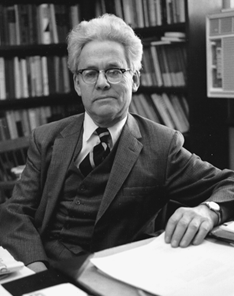 Public Finance economist Richard Musgrave died Jan 15 at the age of 96.
Read the press release from Harvard University here.
Other than the textbook he wrote decades ago, which I had read as an undergraduate student and the content of which I have forgotten long ago, the excitment I got when I read this book while at graduate school is still with me till this day.
David Warsh on Musgrave; and here you can hear a debate between Jim Buchanan and Musgrave on public finance and public choice.
Milton Friedman on China and India
In an e-mail interview with WSJ in July last year, Milton Friedman spoke on China and India:
Any thoughts on a China versus India comparison?
Friedman: Yes. Note the contrast. China has maintained political and human collectivism while gradually freeing the economic market. This has so far been very successful but is heading for a clash, since economic freedom and political collectivism are not compatible. India maintained political democracy while running a collectivist economy. It is now unwinding the latter, which will strengthen freedom of all kinds, so in that respect it is in a better position than China.
Read the whole interview here.
Is economic freedom really incompatible with political collectivism? What about Singapore? Singapore has maintained its economic freedom and political collectivism for decades and I have said something to the effect that this two features could not stand side by side forever before. It might still happen. But I am now far less confident in this prediction's ability (or is it simply our belief?!) to foretell what is going to happen in that country than before.
Despite much advancement in our knowledge of political economy, we still know very little on how political and economic institutions co-evolve.
Any thoughts on a China versus India comparison?
Friedman: Yes. Note the contrast. China has maintained political and human collectivism while gradually freeing the economic market. This has so far been very successful but is heading for a clash, since economic freedom and political collectivism are not compatible. India maintained political democracy while running a collectivist economy. It is now unwinding the latter, which will strengthen freedom of all kinds, so in that respect it is in a better position than China.
Read the whole interview here.
Is economic freedom really incompatible with political collectivism? What about Singapore? Singapore has maintained its economic freedom and political collectivism for decades and I have said something to the effect that this two features could not stand side by side forever before. It might still happen. But I am now far less confident in this prediction's ability (or is it simply our belief?!) to foretell what is going to happen in that country than before.
Despite much advancement in our knowledge of political economy, we still know very little on how political and economic institutions co-evolve.
Sunday, January 21, 2007
Clinton Who?
Two college students in the US chat over lunch.
Student A: Yo, what's up man?
Student B: Nothing. What about you?
Student A: I am getting a bit confused about this whole Hillary Clinton running for the 2008 presidency thing.
Student B: Why do you say that?
Student A: I thought she was already calling the shots back in those days when Bill was the president...
Here is NYT story on Hillary Clinton's annoucement of her decision to run in 2008.
Student A: Yo, what's up man?
Student B: Nothing. What about you?
Student A: I am getting a bit confused about this whole Hillary Clinton running for the 2008 presidency thing.
Student B: Why do you say that?
Student A: I thought she was already calling the shots back in those days when Bill was the president...
Here is NYT story on Hillary Clinton's annoucement of her decision to run in 2008.
Friday, January 19, 2007
A Master of Socialist Economies Shares His Thoughts and Reflections
Retired Harvard professor J. Kornai's intellectual biography is just out. A sample chapter is available here. And yes, there is more content in the book than an elaborate exposition of the concept of soft budget constraint.
How Movies Might Help You Invest
Ideas matter, yeah, we know it.
But exactly how?
Well, you see, when a large number of people who once view capitalist as evil and business as an expression of greed start seeing business and trade as a legitimate way to earn a living, that place presumably has a good chance of experiencing rapid growth.
How can we tell whether a place is ready for that? Any indicator we can use as a guage for that shift in sentiment on the part of the public.
One way to do this may be to take a look at the roles capitalists and businessmen play in the movies produced there. If such were indeed the case, one might want to start betting money on India. Read more here.
But exactly how?
Well, you see, when a large number of people who once view capitalist as evil and business as an expression of greed start seeing business and trade as a legitimate way to earn a living, that place presumably has a good chance of experiencing rapid growth.
How can we tell whether a place is ready for that? Any indicator we can use as a guage for that shift in sentiment on the part of the public.
One way to do this may be to take a look at the roles capitalists and businessmen play in the movies produced there. If such were indeed the case, one might want to start betting money on India. Read more here.
Tuesday, January 16, 2007
Freak-Freakonomics
"Here, I offer a new explanation for the salary
gap between mathematicians and economists:
many economists are hired to justify a viewpoint.
In contrast, I have never heard of mathematicians
who proved a theorem to satisfy their
masters."
Here is game theorist A. Rubinstein offering his outline of his forthcoming (!?) Freak-Freakonomics
gap between mathematicians and economists:
many economists are hired to justify a viewpoint.
In contrast, I have never heard of mathematicians
who proved a theorem to satisfy their
masters."
Here is game theorist A. Rubinstein offering his outline of his forthcoming (!?) Freak-Freakonomics
Monday, January 15, 2007
Milton Friedman: A Biography
After serving us with a wonderful biography on Hayek, Alan Ebenstein did it again with a new book on champion of personal liberty Milton Friedman.
Wednesday, January 10, 2007
Notable New Books
1. Diane Coyle's new book The Soulful Science: What Economists Really Do and Why It Matters. Read a sampe chapter here.
2. Framing Contract Law by Victor Goldberg.
3. The Law-Growth Nexus: The Rule of Law and Economic Development by Kenneth Dam.
2. Framing Contract Law by Victor Goldberg.
3. The Law-Growth Nexus: The Rule of Law and Economic Development by Kenneth Dam.
Young Economists to Watch

There is a very good story in today's NYT on the creative work done by a younger generation of economists.
The name list is posted on the right.
Tuesday, January 09, 2007
Secrets of China's Economic Success (alternatively I could have put it under the most funny line I have read today folder)
It's simple according to R. Preston McAfee
"[T]he most important reason for China's success: China ignored the advice of Harvard economists, Russia did not".
Here's the link.
"[T]he most important reason for China's success: China ignored the advice of Harvard economists, Russia did not".
Here's the link.
Monday, January 08, 2007
China Is Not the Only Anomaly
Arnold Kling up at Econlog wrote:
"Like many commenters on my earlier post, I raise the issue of whether China is an anomaly, because of its relatively high level of economic competitiveness and low level of political competitiveness. I can see three possible outcomes:
1. China continued to open up and develop economically, while remaining a one-party state politically. This would tend to discredit NWW's paper.
2. China undergoes a transition to an open-access order, so that over the next 20 years genuine political competition emerges.
3. To retain power, China's leaders maintain control over the access to capital in the economy. Eventually, a system of centralization and government favoritism leads to economic stagnation before China achieves full economic development."
Read more here.
But China is not the only anomaly in that a rapid growing economy coexists with a close political system. Singapore is another example.
While scenarios 1 and 2 seem plausible, scenario 3 is unlikely because of the continuation of China's financial market liberalization. Pressure for China to continue to do so partially comes from China's obligation to open its financial sector under its WTO commitment.
A more interesting question to me than venturing a guess on how things in China would unfold 30 or 40 years from now is how it got here in the first place.
"Like many commenters on my earlier post, I raise the issue of whether China is an anomaly, because of its relatively high level of economic competitiveness and low level of political competitiveness. I can see three possible outcomes:
1. China continued to open up and develop economically, while remaining a one-party state politically. This would tend to discredit NWW's paper.
2. China undergoes a transition to an open-access order, so that over the next 20 years genuine political competition emerges.
3. To retain power, China's leaders maintain control over the access to capital in the economy. Eventually, a system of centralization and government favoritism leads to economic stagnation before China achieves full economic development."
Read more here.
But China is not the only anomaly in that a rapid growing economy coexists with a close political system. Singapore is another example.
While scenarios 1 and 2 seem plausible, scenario 3 is unlikely because of the continuation of China's financial market liberalization. Pressure for China to continue to do so partially comes from China's obligation to open its financial sector under its WTO commitment.
A more interesting question to me than venturing a guess on how things in China would unfold 30 or 40 years from now is how it got here in the first place.
Wednesday, January 03, 2007
Learn Austrian Economics Through the Web!
Here's Mario Rizzo's freshly minted website with links to some of his scholarly work.
Websites of Larry White and George Selgin if you want to learn more about what Austrians have to say on monetary theory and monetary history.
Roger Garrison's site would provide you with a wealth of info on how Austrian macroeconomics differs from other schools of thought.
Websites of Larry White and George Selgin if you want to learn more about what Austrians have to say on monetary theory and monetary history.
Roger Garrison's site would provide you with a wealth of info on how Austrian macroeconomics differs from other schools of thought.
Monday, December 25, 2006
Another New Monograph on China
Not long after the publication of Barry Naugton's The Chinese Economy, now students of China will get a treat from another China expert Dwight Perkins at Harvard. His monograph entitled "The Challenges of China's Economic Growth", which will appear in print later, is now available at American Enterprise Institute's website.
Thursday, December 21, 2006
Books I Recommend
If you enjoy Fooled by Randomness, probably you would enjoy Taleb's new book The Black Swan.
A few good law and economics works are out in the past few years, Don Wittman has just added another one to the list. It's called "Economic Foundations of Law and Organization."
Wary that it may take you too long to read Adam Smith's two great works, try this one then.
Just a reminder, John Taylor's Global Financial Warriors is out now.
A few good law and economics works are out in the past few years, Don Wittman has just added another one to the list. It's called "Economic Foundations of Law and Organization."
Wary that it may take you too long to read Adam Smith's two great works, try this one then.
Just a reminder, John Taylor's Global Financial Warriors is out now.
Should Tax Payers Subsidise Family Farms?
Apparently some US politicians think tax payers should do so. Here is what Washington Post reported on today:
"In today's fast-paced, interconnected world, there are few industries where sons and daughters can work side-by-side with moms and dads, grandmas and grandpas," Rep. Jerry Moran (R-Kan.) said last year. "But we still find that today in agriculture. . . . It is a celebration of what too many in our country have forgotten, an endangered way of life that we must work each and every day to preserve."
Read the whole story here.
Jerry's argument is flawed. If one really values the satisfaction derived from working with dad, mom, bro, and sis, then the one who benefits from this work arrangement should pay, but not unrelated third parties who gain nothing from such work arrangement.
His argument is also confusing in that it seems to imply that people have now lost their freedom to work with one's family members. This is not true. Modern folks can always choose to work side by side with their family members if they want to. But that work arrangement carries with it a hefty price tag in terms of lower productivity that few people will choose to do so today. So it is wrong on Jerry's part to call this work arrangement "endangered" as if we were being forced to abandon such institutional arrangement. No we don't.
"In today's fast-paced, interconnected world, there are few industries where sons and daughters can work side-by-side with moms and dads, grandmas and grandpas," Rep. Jerry Moran (R-Kan.) said last year. "But we still find that today in agriculture. . . . It is a celebration of what too many in our country have forgotten, an endangered way of life that we must work each and every day to preserve."
Read the whole story here.
Jerry's argument is flawed. If one really values the satisfaction derived from working with dad, mom, bro, and sis, then the one who benefits from this work arrangement should pay, but not unrelated third parties who gain nothing from such work arrangement.
His argument is also confusing in that it seems to imply that people have now lost their freedom to work with one's family members. This is not true. Modern folks can always choose to work side by side with their family members if they want to. But that work arrangement carries with it a hefty price tag in terms of lower productivity that few people will choose to do so today. So it is wrong on Jerry's part to call this work arrangement "endangered" as if we were being forced to abandon such institutional arrangement. No we don't.
Tuesday, December 19, 2006
As Demand for Adoption Goes Up, So Does its Price
In introductory economics class, all students learn that price of the good in question rises if demand curve shifts rightward. And yes, it applies to child adoption as well.
A story in Wall Street Journal today reported that:
"China, the most popular foreign country for U.S. adoptions, is considering new rules that could disqualify thousands of would-be parents. Those new rules would bar people who are single, obese, over 50 years old, or currently taking psychiatric medications from adopting Chinese children, according to several U.S. adoption agencies that have seen the regulations. They would ban disabled people and families with net assets of less than $80,000. And they would set new minimums on length of marriage for couples seeking to adopt."
Why China would like to revise its adoption policy?
The story continues:
"China says its rationale for a change in rules is simply that it cannot meet the demand of prospective families. Birthrates are falling, and as the Chinese economy booms, fewer parents are abandoning their children due to poverty. A traditional preference for boys appears to be waning, so fewer girls are put up for adoption. And with the recent loosening of China's one-child rule, more families are keeping their second child. The result is that "the number of kids available for international adoption is naturally declining," says Sun Wencan, who runs the adoption department of the Social Welfare Division of China's Ministry of Civil Affairs."
Read the whole thing here.
A story in Wall Street Journal today reported that:
"China, the most popular foreign country for U.S. adoptions, is considering new rules that could disqualify thousands of would-be parents. Those new rules would bar people who are single, obese, over 50 years old, or currently taking psychiatric medications from adopting Chinese children, according to several U.S. adoption agencies that have seen the regulations. They would ban disabled people and families with net assets of less than $80,000. And they would set new minimums on length of marriage for couples seeking to adopt."
Why China would like to revise its adoption policy?
The story continues:
"China says its rationale for a change in rules is simply that it cannot meet the demand of prospective families. Birthrates are falling, and as the Chinese economy booms, fewer parents are abandoning their children due to poverty. A traditional preference for boys appears to be waning, so fewer girls are put up for adoption. And with the recent loosening of China's one-child rule, more families are keeping their second child. The result is that "the number of kids available for international adoption is naturally declining," says Sun Wencan, who runs the adoption department of the Social Welfare Division of China's Ministry of Civil Affairs."
Read the whole thing here.
Sunday, November 26, 2006
Why Home Schooling is Controversial?
I have long been an advocate for parents to have the right to teach their children at home here in HK. In the US, and some other countries, it is legal for parents to teach their kids at home.
I am always curious why such a sensible policy seems so controversial to most people.
The basic rationale in support of homeshooling is this: nobody knows a kid better than his/her parents. QED.
I am not arguing for the banishment of traditional schools, I am arguing for a marginal change in educational system, to let parents have one more choice in seeking out the best education for their kids. And what's wrong with that?
On the supply side, for those with vested interests in the exisiting education system, I can see why they would oppose such a sensible policy. For an example, if you were a teacher at a public school, more kids being taught at home mean less students enrollment. That in turn means less funding and one might have to accept a pay cut someday.
Another reason for opposing home schooling came to my mind after I read this story in the New York Times. I call this the "I know your kid better than you do syndrome". Educational experts simply know, or think they know, how to teach other peoples' kids better than those kids' parents. This is certainly debatable.
From the demand side, the reason why parents may not want to teach their own kids (other factors being held constant, like their income, time availability, their educational level) at home also occured to me while reading the same NYT story. Peoples' innate fear to go about their own way without guidance. People simply want to be told what to do. This seems related to what Hayek has said in Fatal Conceit. That contemporary people still have that lingering longing to be led, part of the legacy we inherit to this day from the time when we live in a small community and individuals' decisions are made according to the directions of the wiseman in the group.
I am always curious why such a sensible policy seems so controversial to most people.
The basic rationale in support of homeshooling is this: nobody knows a kid better than his/her parents. QED.
I am not arguing for the banishment of traditional schools, I am arguing for a marginal change in educational system, to let parents have one more choice in seeking out the best education for their kids. And what's wrong with that?
On the supply side, for those with vested interests in the exisiting education system, I can see why they would oppose such a sensible policy. For an example, if you were a teacher at a public school, more kids being taught at home mean less students enrollment. That in turn means less funding and one might have to accept a pay cut someday.
Another reason for opposing home schooling came to my mind after I read this story in the New York Times. I call this the "I know your kid better than you do syndrome". Educational experts simply know, or think they know, how to teach other peoples' kids better than those kids' parents. This is certainly debatable.
From the demand side, the reason why parents may not want to teach their own kids (other factors being held constant, like their income, time availability, their educational level) at home also occured to me while reading the same NYT story. Peoples' innate fear to go about their own way without guidance. People simply want to be told what to do. This seems related to what Hayek has said in Fatal Conceit. That contemporary people still have that lingering longing to be led, part of the legacy we inherit to this day from the time when we live in a small community and individuals' decisions are made according to the directions of the wiseman in the group.
Thursday, November 23, 2006
Ben Bernanke in China
New York Times reported that Treasury Secretary Paul Paulson Jr. has enlisted Fed Chairman Ben Bernanke to join him in yet another trip to China next month.
The main goal of the trip is again to push (or is the word threaten more appropriate?) China to do something about the massive trade imbalances between the two countries. Certainly the value of Yuan would once again be the focus of discussion.
What would stengthen Paul's hand in negotiating with the Chinese is not the presence of Fed Chief Bernanke though. It is the fact that the Democrats have staged a comeback in eletions just completed. Paul could leverage on the fact that he needs to bring home concrete results in order to stop the Congress, now in the hands of the Democrats rather than controlled by the Republicans, from passing protectionist laws that might have harmful effects to China's exports i a bid to get concessions from his Chinese counterparts.
Will the Chinese be so easily bluffed? Stay tuned, we would find out in a month.
And here is the NYT story.
The main goal of the trip is again to push (or is the word threaten more appropriate?) China to do something about the massive trade imbalances between the two countries. Certainly the value of Yuan would once again be the focus of discussion.
What would stengthen Paul's hand in negotiating with the Chinese is not the presence of Fed Chief Bernanke though. It is the fact that the Democrats have staged a comeback in eletions just completed. Paul could leverage on the fact that he needs to bring home concrete results in order to stop the Congress, now in the hands of the Democrats rather than controlled by the Republicans, from passing protectionist laws that might have harmful effects to China's exports i a bid to get concessions from his Chinese counterparts.
Will the Chinese be so easily bluffed? Stay tuned, we would find out in a month.
And here is the NYT story.
Tuesday, November 21, 2006
Monday, November 20, 2006
Robert Barro Right, Gary Becker Wrong, Can it be Real?
" In a 1973 workshop, I presented my paper, published in the 1974 Journal ofPolitical Economy, about Ricardian Equivalence for budget deficits. (In the model, taxesand budget deficits had equivalent economic effects, along the lines expressed by theclassical British economist David Ricardo. However, I should mention that no one in the1973 workshop noted the connection between my paper and Ricardo.)
This was the onlytime I witnessed a seminar attended simultaneously by the three great pillars of theChicago School—Milton, George Stigler, and Gary Becker. At one point, Gary and I gotinvolved in a heated dispute on a technical point in the paper. I recall Milton putting hishead down, deep in thought for at least a full minute, while the room was silent. Given Milton’s mental quickness, this prolonged deliberation was quite unusual, and there wasan atmosphere of thick tension in the room.
Finally, Milton lifted his head and declared,in an incredulous way, that Gary was wrong (a nearly unprecedented event) and that I was therefore right. For some reason, Gary lacks any recollection of this event."
Read on Bob Barro's recollection here, also make sure you scroll down to the very end of the paper where you will two extremely nice pics of M.F., one with him standing patiently waiting for his traffic ticket!
This was the onlytime I witnessed a seminar attended simultaneously by the three great pillars of theChicago School—Milton, George Stigler, and Gary Becker. At one point, Gary and I gotinvolved in a heated dispute on a technical point in the paper. I recall Milton putting hishead down, deep in thought for at least a full minute, while the room was silent. Given Milton’s mental quickness, this prolonged deliberation was quite unusual, and there wasan atmosphere of thick tension in the room.
Finally, Milton lifted his head and declared,in an incredulous way, that Gary was wrong (a nearly unprecedented event) and that I was therefore right. For some reason, Gary lacks any recollection of this event."
Read on Bob Barro's recollection here, also make sure you scroll down to the very end of the paper where you will two extremely nice pics of M.F., one with him standing patiently waiting for his traffic ticket!
Thomas Sowell on M.F.
"Milton Friedman may well have been the most important economist of the 20th century, even if John Maynard Keynes was the most famous."
Tom Sowell on his teacher M.F. in WSJ.
Tom Sowell on his teacher M.F. in WSJ.
Gary Becker on M.F.
"After my first class with him a half-century ago, I recognized that I was fortunate to have an extraordinary economist as a teacher. During that class he asked a question, and I shot up my hand and was called on to provide an answer. I still remember what he said, "That is no answer, for you are only restating the question in other words." I sat down humiliated, but I knew he was right."
That is Gary Becker writing about his first contact with his teacher M.F. Read it here.
Dick Posner's post is far more negative though, read it also.
That is Gary Becker writing about his first contact with his teacher M.F. Read it here.
Dick Posner's post is far more negative though, read it also.
Larry Summers on M.F.
"Milton Friedman and I probably never voted the same way in any election. To my mind, his thinking gave too little weight to considerations of social justice and was far too cynical about the capacity of collective action to make people better off. I believe that some of the great challenges we face today, like rising inequality and global climate change, require that the free market be tempered instead of venerated. And like any economist, I have my list of areas where I believe Mr. Friedman oversimplified or was simply wrong.
Nonetheless, like many others I feel that I have lost a hero — a man whose success demonstrates that great ideas convincingly advanced can change the lives of people around the world."
That is from a NYT oped written by Larry Summers, read the whole thing here.
Nonetheless, like many others I feel that I have lost a hero — a man whose success demonstrates that great ideas convincingly advanced can change the lives of people around the world."
That is from a NYT oped written by Larry Summers, read the whole thing here.
Sunday, November 19, 2006
Origin of the Methodology of Positive Economics?
In an 1992 interview, as a digression while responding to a question on the Mont Pelerin Society, M.F. said:
"As an amusing footnote, one of the major benefits that I personally derived from the first meeting of the Mont Pelerin Society in 1947 was meeting Karl Popper and having an opportunity for some long discussions with him, not on economic policy at all, but on methodology in the social sciences and in the physical sciences. That conversation played a not negligible role in a later essay of mine, "The Methodology of Positive Economics," which has probably led to more pages of subsequent print by others than anything else I've written. It just shows how nature and science works in wondrous ways."
Read the interview here.
"As an amusing footnote, one of the major benefits that I personally derived from the first meeting of the Mont Pelerin Society in 1947 was meeting Karl Popper and having an opportunity for some long discussions with him, not on economic policy at all, but on methodology in the social sciences and in the physical sciences. That conversation played a not negligible role in a later essay of mine, "The Methodology of Positive Economics," which has probably led to more pages of subsequent print by others than anything else I've written. It just shows how nature and science works in wondrous ways."
Read the interview here.
James Shikwatis versus Jeff Sachs
Mr. Shikwati, from Kenya, is now a conservative phenomenon.
"He has published scores of articles hailing business as Africa's salvation; offered free-market lectures on five continents; and, defying the zeitgeist of the Bono age, issued scathing attacks on foreign assistance, which he blames for Africa’s poverty. When Western countries pledged to double African aid last year, an interview with an angry Mr. Shikwati filled two pages of Der Spiegel, the German magazine.
“For God’s sake, please stop the aid!” he told the magazine."
That is from an excellent story in NYT on how ideas matter on the policy front. Read it here.
The line that I like best is :
“We have to stop looking for other people to save us. We need to look for ways to save ourselves.”
"He has published scores of articles hailing business as Africa's salvation; offered free-market lectures on five continents; and, defying the zeitgeist of the Bono age, issued scathing attacks on foreign assistance, which he blames for Africa’s poverty. When Western countries pledged to double African aid last year, an interview with an angry Mr. Shikwati filled two pages of Der Spiegel, the German magazine.
“For God’s sake, please stop the aid!” he told the magazine."
That is from an excellent story in NYT on how ideas matter on the policy front. Read it here.
The line that I like best is :
“We have to stop looking for other people to save us. We need to look for ways to save ourselves.”
Wong Kai-wai story in the New York Times, yes, you read it right, NYT
"ON a SoHo film set last August, Jude Law and Norah Jones were getting intimate. Repeatedly intimate. To be precise, they had kissed upwards of 150 times in the past three days.
The occasion for this outbreak of passion was “My Blueberry Nights,” the first English-language film by Wong Kar-wai, the maverick Hong Kong director turned avatar of cosmopolitan cool. This particular night was stifling as the crew spilled out of Palacinka, a small cafe on Grand Street that was the principal New York location, preparing for yet another take of the scene known as “the Kiss.”"
Read the whole story here.
Now who said HK film industry is dying? Yes, there may be less locally produced firms. What happens is, in the age of globalization, a task (film-making) is sliced up into finer parts with each of them being made at the location best at doing it.
Other stuff, like clothing has long been produced that way. So if we are not worry about there are less locally made shirts or ties, there is also no reason to sweat over the dwindling number of locally made movies. What is interesting is to investigate what factors account for this new mode of production in the movie business. Is it financial innovation? Is it technological advancement? Or is it some sort of organizational change which makes coordiating the task of making a movie in many different places a far more manageable task?
The occasion for this outbreak of passion was “My Blueberry Nights,” the first English-language film by Wong Kar-wai, the maverick Hong Kong director turned avatar of cosmopolitan cool. This particular night was stifling as the crew spilled out of Palacinka, a small cafe on Grand Street that was the principal New York location, preparing for yet another take of the scene known as “the Kiss.”"
Read the whole story here.
Now who said HK film industry is dying? Yes, there may be less locally produced firms. What happens is, in the age of globalization, a task (film-making) is sliced up into finer parts with each of them being made at the location best at doing it.
Other stuff, like clothing has long been produced that way. So if we are not worry about there are less locally made shirts or ties, there is also no reason to sweat over the dwindling number of locally made movies. What is interesting is to investigate what factors account for this new mode of production in the movie business. Is it financial innovation? Is it technological advancement? Or is it some sort of organizational change which makes coordiating the task of making a movie in many different places a far more manageable task?
Milton Friedman on Hong Kong (1998)
"According to the latest figures I have, per capita income in Hong Kong is almost identical with that in the United States.
That is close to incredible. Here we are—a country of 260 million people that stretches from sea to shining sea, with enormous resources, and a two-hundred-year background of more or less steady growth, supposedly the strongest and richest country in the world, and yet six million people living on a tiny spit of land with negligible resources manage to produce as high a per capita income. How come?"
The above is written by M.F. for the Hoover Digest back in 1998. Read the whole thing here.
With the HK government playing with the idea of introducing minimum wage, competition law and a host of other hand-out schemes, and formal abrogation of its long-held "positive non-intervention" economic philosophy, Friedman must be very upset and heart-broken when he wrote this shortly before his death.
That is close to incredible. Here we are—a country of 260 million people that stretches from sea to shining sea, with enormous resources, and a two-hundred-year background of more or less steady growth, supposedly the strongest and richest country in the world, and yet six million people living on a tiny spit of land with negligible resources manage to produce as high a per capita income. How come?"
The above is written by M.F. for the Hoover Digest back in 1998. Read the whole thing here.
With the HK government playing with the idea of introducing minimum wage, competition law and a host of other hand-out schemes, and formal abrogation of its long-held "positive non-intervention" economic philosophy, Friedman must be very upset and heart-broken when he wrote this shortly before his death.
Thursday, November 16, 2006
Thoughts on M.F.
Here's how David Friedman, son of M.F., remembers his father.
Chicago economist Austan Goolsbee wrote in the NYT:
"When we heard the news at the University of Chicago that he had died, we actually stopped arguing and were quiet for a moment. It was a most extraordinary event for Chicago economists. Each of us seemed to contemplate Mr. Friedman’s legacy for ourselves. After that bit of calm, the argument resumed.
It was, perhaps, just what the old man would have wanted."
Chicago economist Austan Goolsbee wrote in the NYT:
"When we heard the news at the University of Chicago that he had died, we actually stopped arguing and were quiet for a moment. It was a most extraordinary event for Chicago economists. Each of us seemed to contemplate Mr. Friedman’s legacy for ourselves. After that bit of calm, the argument resumed.
It was, perhaps, just what the old man would have wanted."
Read the whole thing here.
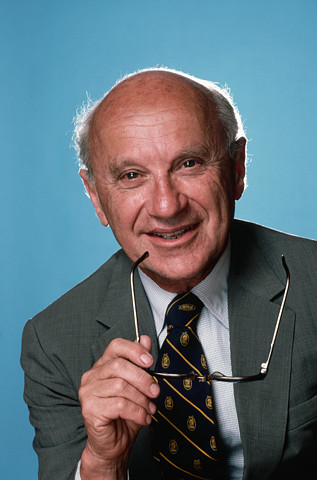
Tuesday, November 07, 2006
The Chinese Economy
Barry Naughton at UCSD has done it again, after his 1995 "Growing Out of the Plan", he has offered us students of Chinese economy another comphrensive book entitled "The Chinese Economy".
Thursday, October 19, 2006
Bidding Farewell to Chicago School of Economics
HK University of Science and Technology professor of finance K.C. Chan has a piece in today's edition of Ming Pao (in Chinese) pretty much endorsing some sort of light-handed approach to industrial policy (his example is HK government's involvement in luring Disney to come to HK).
And I quote:
"如果我們絕對不容許政府冒風險,官僚因循不變的習性只會變本加厲。所以,政府的參與,關鍵在於有效獲取市場信息,適當地利用市場來達至政策目的,歸根究柢,這是如何增加政府官僚的判斷能力、提高政策執行能力的問題!且這些風險也是可以量化的,舉例說,假如迪士尼投資不像預期的成功,從商業營運的角度看,投資項目有賺有蝕,政府的成敗,也應從整體角度去衡量效益。"
Ooops, I can almost feel George Stigler rolling his grave!
Granted that Chan got his Ph.D. in finance at Chicago, not economics, but still it is hard to believe that with big names like George Stigler and Sam Peltzman at Chicago's graduate school, Chan is not aware of these scholars' views on such matters.
And if you read the piece, you will get the impression that he is not familiar with the cutting edge research in industrial policy as well. Regina Ip, another big fan of industrial policy, does deserve some credit on that score, as research reports put out by her think-tank do refer to the cutting edge research in industrial policy.
And I quote:
"如果我們絕對不容許政府冒風險,官僚因循不變的習性只會變本加厲。所以,政府的參與,關鍵在於有效獲取市場信息,適當地利用市場來達至政策目的,歸根究柢,這是如何增加政府官僚的判斷能力、提高政策執行能力的問題!且這些風險也是可以量化的,舉例說,假如迪士尼投資不像預期的成功,從商業營運的角度看,投資項目有賺有蝕,政府的成敗,也應從整體角度去衡量效益。"
Ooops, I can almost feel George Stigler rolling his grave!
Granted that Chan got his Ph.D. in finance at Chicago, not economics, but still it is hard to believe that with big names like George Stigler and Sam Peltzman at Chicago's graduate school, Chan is not aware of these scholars' views on such matters.
And if you read the piece, you will get the impression that he is not familiar with the cutting edge research in industrial policy as well. Regina Ip, another big fan of industrial policy, does deserve some credit on that score, as research reports put out by her think-tank do refer to the cutting edge research in industrial policy.
Wednesday, October 11, 2006
Exchange Rate or is it Exchange Rage
A buddy of mine since graduate school told me a joke the other day. Apparently one of the Ph.D. students at his school has exchange rate mispelled as exchange rage on one of her power point presentations.
Tuesday, October 10, 2006
Notable Books
1. Adam's Fallacy. And it has nothing to do with Adam and Eve.
2. Dynasties. A book on family businesses.
3. The Origin of Wealth. "There are thought-provoking ideas on almost every page...It is unquestionably the most important business book of the year." - John Kay, Management Today.
Read Chapter 1 and more reviews here.
4. The Authentic Adam Smith. Read reviews here and here.
5. And finally, here is Freakonomics, revised edition. Funny thing is, though the book is still listed as unpublished at Amazon, I actually saw a paper back version of it at a book store here in Hong Kong.
2. Dynasties. A book on family businesses.
3. The Origin of Wealth. "There are thought-provoking ideas on almost every page...It is unquestionably the most important business book of the year." - John Kay, Management Today.
Read Chapter 1 and more reviews here.
4. The Authentic Adam Smith. Read reviews here and here.
5. And finally, here is Freakonomics, revised edition. Funny thing is, though the book is still listed as unpublished at Amazon, I actually saw a paper back version of it at a book store here in Hong Kong.
Monday, October 09, 2006
師生情
那天在網上看到論文指導老師 Richard Wagner 即將在母校的工作坊上宣讀其撰寫中的新書的其中一章。
把文章讀後馬上把自己的見解透過電郵轉告老師。
老師隔一天便給我回覆,內容主要都是一些客套話。 讀後心裏不知何解有一股屈悶。
數小時後, 老師再發一電郵說留意到我的電郵地址與過往的有分別, 查詢我的近况是否一切安好時,我頓時感到開懷了。
把文章讀後馬上把自己的見解透過電郵轉告老師。
老師隔一天便給我回覆,內容主要都是一些客套話。 讀後心裏不知何解有一股屈悶。
數小時後, 老師再發一電郵說留意到我的電郵地址與過往的有分別, 查詢我的近况是否一切安好時,我頓時感到開懷了。
Edmund Phelps on Knight, Hayek, and Polanyi
It is official that Edmund Phelps at Columbia is the latest recipiceint of the Nobel prize in economics.
By now one should have some rough idea of what his contributions to economics are, if not, read this.
One thing probably many pundits have not mentioned, however, is that Phelps recently seems to have rediscovered the work of F. Hayek.
At this year's American Economic Association meeting held in January, Phelps presented a paper entitled, " Further Steps to a Theory of Innovation and Growth – On the Path Begun by Knight, Hayek and Polanyí." The paper can be accessed here.
Phelps is also the Director of the recently formed The Center of Capitalism and Society, part of the Earth Institute led by Jeff Sachs.
By now one should have some rough idea of what his contributions to economics are, if not, read this.
One thing probably many pundits have not mentioned, however, is that Phelps recently seems to have rediscovered the work of F. Hayek.
At this year's American Economic Association meeting held in January, Phelps presented a paper entitled, " Further Steps to a Theory of Innovation and Growth – On the Path Begun by Knight, Hayek and Polanyí." The paper can be accessed here.
Phelps is also the Director of the recently formed The Center of Capitalism and Society, part of the Earth Institute led by Jeff Sachs.
Wednesday, October 04, 2006
The Folly of HK's Minimum Wage Debate
很多人把最低工資視為有效的扶貧手段, 支持者又常以 Card and Krueger 的研究作為支持其主張的理據。
這些人當中,究竟有多少人看過原著? 木宰羊!My bet is that 99.99 % of them have not.
Read this: The minimum wage is a blunt instrument for reducing overall poverty, however, because many minimum-wage earners are not in poverty and because many of those in poverty are not connected to the labor market. We calculate that the 90-cent increase in the minimum wage between 1989 and 1991 transferred roughly $5.5 billion to low-wage workers.... an amount that is smaller than most other federal antipoverty programs, and that can have only limited effects on the overall income distribution.
The source? Card and Krueger in Myth and Measurement (p.3).
Hat tip to Bryan Caplan at Econlog for the pointer.
這些人當中,究竟有多少人看過原著? 木宰羊!My bet is that 99.99 % of them have not.
Read this: The minimum wage is a blunt instrument for reducing overall poverty, however, because many minimum-wage earners are not in poverty and because many of those in poverty are not connected to the labor market. We calculate that the 90-cent increase in the minimum wage between 1989 and 1991 transferred roughly $5.5 billion to low-wage workers.... an amount that is smaller than most other federal antipoverty programs, and that can have only limited effects on the overall income distribution.
The source? Card and Krueger in Myth and Measurement (p.3).
Hat tip to Bryan Caplan at Econlog for the pointer.
Thursday, September 28, 2006
Milton Friedman and George Stigler
I would file this under the best lines I have read today category except that the line comes from letters by G. Stigler to M. Friedman:
"It may merely be prejudice, but I'm inclined to write him [Samuelson] off as an economist."
"Of the many speakers only one was terrible -- shallow and pretentious, Joe Schumpeter."
I got this from the book review of the new book Making Chicago Price Theory: Friedman-Stigler Correspondence, 1945-1957 by Craig Freedman at EH net, read the review here.
Thanks to Peter Klein at Organization and Markets for the pointer.
"It may merely be prejudice, but I'm inclined to write him [Samuelson] off as an economist."
"Of the many speakers only one was terrible -- shallow and pretentious, Joe Schumpeter."
I got this from the book review of the new book Making Chicago Price Theory: Friedman-Stigler Correspondence, 1945-1957 by Craig Freedman at EH net, read the review here.
Thanks to Peter Klein at Organization and Markets for the pointer.
Friday, September 22, 2006
Another Reason for HK's Decline
HK's deposit insurance scheme will be launched next week, read more here.
Do we need such a scheme now? No.
Reason for your opposition? According to a new World Bank study, cross-country empirical research and individual-country experience confirm that, for at least the time being, officials in many countries would do well to delay the installation of a deposit insurance system. Here is the paper.
Do we need such a scheme now? No.
Reason for your opposition? According to a new World Bank study, cross-country empirical research and individual-country experience confirm that, for at least the time being, officials in many countries would do well to delay the installation of a deposit insurance system. Here is the paper.
Tuesday, September 19, 2006
Best Line I have Read Today
"I almost died when for a year and a half we had to pretend we were governing...Instead, we lied morning, evening and night."
Ferenc Gyurcsany, Prime Minister of Hungary
Ferenc Gyurcsany, Prime Minister of Hungary
Fischer Black
Here is David Warsh on Fischer Black.
This is the best part:
A few months earlier, while having trouble fastening the collar button of his shirt, he had joked with his wife that perhaps the problem was a tumor. Instead of going to doctor, however, he plunged into reading up on the possibilities -- "research," he called it. And when he finally got the diagnosis of the throat cancer that soon would end his life, Mehrling relates, "he burst into spontaneous laughter."
This is the best part:
A few months earlier, while having trouble fastening the collar button of his shirt, he had joked with his wife that perhaps the problem was a tumor. Instead of going to doctor, however, he plunged into reading up on the possibilities -- "research," he called it. And when he finally got the diagnosis of the throat cancer that soon would end his life, Mehrling relates, "he burst into spontaneous laughter."
Revealed Preference
"千萬不要去 Sentosa, 那裏連海洋公園都不如。" 一位香港女生對她友人說。
Oh yeah, if she really thinks so negatively about Singapore, why bother? She must be lying.
How do I know? The answer is in the title of this post: revealed preference.
唉,香港的女生。
Oh yeah, if she really thinks so negatively about Singapore, why bother? She must be lying.
How do I know? The answer is in the title of this post: revealed preference.
唉,香港的女生。
Sentosa
"爸, 起飛了, 真刺激" 洋興奮地說。
飛機不但帶我倆離開香港,也撇下抑壓在胸中的一股悶氣。
"為何不等Anna回來才去?" 岳母帶疑惑地問。
實情是這次 Sentosa 之旅不單為了洋,也為自己。
...to be continued, or may be not.
飛機不但帶我倆離開香港,也撇下抑壓在胸中的一股悶氣。
"為何不等Anna回來才去?" 岳母帶疑惑地問。
實情是這次 Sentosa 之旅不單為了洋,也為自己。
...to be continued, or may be not.
Best Line I have Read Today
"If only GDP were proportional to literary talent, the Russians would be the richest people on earth."
That is from Econlog's Brian Caplan
That is from Econlog's Brian Caplan
Wednesday, September 13, 2006
Best Lines I have Read Today
"Climate statistics show that, with all the "global warming" hysteria today, our temperatures are still not as high as they were back in medieval times. Those medieval folks must have been driving a lot of cars and SUVs.
Doing 90 percent of what is required is one of the biggest wastes because you have nothing to show for all your efforts. But doing 110 percent of what is expected is one of the smartest investments because it can pay off with a big reputation for just a little more effort.
For university presidents, as for politicians at all levels, one of the most valuable talents for the success of their careers is the ability to say things that make no sense, with a straight face and a lofty tone. "
They are all from Tom Sowell, read more here.
Hat tip to Stationary Bandit for the pointer.
Doing 90 percent of what is required is one of the biggest wastes because you have nothing to show for all your efforts. But doing 110 percent of what is expected is one of the smartest investments because it can pay off with a big reputation for just a little more effort.
For university presidents, as for politicians at all levels, one of the most valuable talents for the success of their careers is the ability to say things that make no sense, with a straight face and a lofty tone. "
They are all from Tom Sowell, read more here.
Hat tip to Stationary Bandit for the pointer.
Tuesday, September 12, 2006
Do Your Math
WSJ wrote: "The nation's math teachers, on the front lines of a 17-year curriculum war, are getting some new marching orders: Make sure students learn the basics.
In a report to be released today, the National Council of Teachers of Mathematics, which represents 100,000 educators from prekindergarten through college, will give ammunition to traditionalists who believe schools should focus heavily and early on teaching such fundamentals as multiplication tables and long division." Read the whole story here.
One motive for this change in the math curriculum is apparently the low scores American kids get in interntational math competition. But the important question is, does it matter? Will the economic might of the US inevitably be eroded because the "wrong" kind of math is taught to its kids ?
If you trust what Gary Becker and Dick Posner have to say on this issue, the bottomline is: It doesn't matter.
In a report to be released today, the National Council of Teachers of Mathematics, which represents 100,000 educators from prekindergarten through college, will give ammunition to traditionalists who believe schools should focus heavily and early on teaching such fundamentals as multiplication tables and long division." Read the whole story here.
One motive for this change in the math curriculum is apparently the low scores American kids get in interntational math competition. But the important question is, does it matter? Will the economic might of the US inevitably be eroded because the "wrong" kind of math is taught to its kids ?
If you trust what Gary Becker and Dick Posner have to say on this issue, the bottomline is: It doesn't matter.
Monday, September 11, 2006
Read My Lips
Today's SCMP reported "Donald Tsang Yam-kuen yesterday declared the end of "positive non- intervention", a policy that has previously been hailed as a pillar of Hong Kong's economic success...."Everybody says Hong Kong has a `positive non-intervention policy'. The policy was put forward a long time ago by a financial secretary, Sir Philip Haddon-Cave."
The story continued,"All along, we have never said we'd made it a blueprint for our economic development," Mr Tsang said in response to a question on whether the administration had adjusted the policy."What we have done in practice - and if you remember the direction outlined by former financial secretaries - is adhere to the principles of `big market, small government'. The government will try our best to meet the market's needs." Asked why the policy was still taught in schools, Mr Tsang said: "They teach it wrong." " Read the story here.
Oh really?
Here is Donald Tsang again in his 2000 budget speech (paragraphs 17-19):
"Market-led means that Government does not seek to direct or plan the course that our economy or markets should take. Instead, we believe that investors and entrepreneurs understand markets far better than officials and that private initiatives are a surer way to build Hong Kong's prosperity than any bureaucrat's blueprints.
Our economy has transformed itself several times over the last 50 years. Every time one door closed, a new one opened leading to bigger and better opportunities. Through their own initiatives, our talented and hard-working people have managed to create these new opportunities for growth. The Government has had the good sense not to try to usurp the business sector's role, nor to seek to direct economic developments. Instead, it has confined itself to creating the conditions that allow individuals and businesses to flourish. We started out as a modest trading port, which our people then transformed into a manufacturing centre. They developed global trading links. They ventured into the Mainland. They built Hong Kong into a world-class financial centre. And now, again driven by market forces, they are seizing new opportunities in cyberspace.
None of these successful transformations was the result of government planning or directing the economy. This lesson from the past must be the guiding principle for anyone entrusted with the management of Hong Kong's economic affairs."
Hat tip to Wai-hong Yeung at the Next Media for reminding me of these passages during our conversation.
The story continued,"All along, we have never said we'd made it a blueprint for our economic development," Mr Tsang said in response to a question on whether the administration had adjusted the policy."What we have done in practice - and if you remember the direction outlined by former financial secretaries - is adhere to the principles of `big market, small government'. The government will try our best to meet the market's needs." Asked why the policy was still taught in schools, Mr Tsang said: "They teach it wrong." " Read the story here.
Oh really?
Here is Donald Tsang again in his 2000 budget speech (paragraphs 17-19):
"Market-led means that Government does not seek to direct or plan the course that our economy or markets should take. Instead, we believe that investors and entrepreneurs understand markets far better than officials and that private initiatives are a surer way to build Hong Kong's prosperity than any bureaucrat's blueprints.
Our economy has transformed itself several times over the last 50 years. Every time one door closed, a new one opened leading to bigger and better opportunities. Through their own initiatives, our talented and hard-working people have managed to create these new opportunities for growth. The Government has had the good sense not to try to usurp the business sector's role, nor to seek to direct economic developments. Instead, it has confined itself to creating the conditions that allow individuals and businesses to flourish. We started out as a modest trading port, which our people then transformed into a manufacturing centre. They developed global trading links. They ventured into the Mainland. They built Hong Kong into a world-class financial centre. And now, again driven by market forces, they are seizing new opportunities in cyberspace.
None of these successful transformations was the result of government planning or directing the economy. This lesson from the past must be the guiding principle for anyone entrusted with the management of Hong Kong's economic affairs."
Hat tip to Wai-hong Yeung at the Next Media for reminding me of these passages during our conversation.
Wednesday, September 06, 2006
Collected Works of Armen Alchain
Liberty Fund just announced that it will publish a two volume set of Armen Alchian's scholarly papers later this year.
Armen, of course, is one of the major contributors to the economic approach to property rights, theory of money, theory of unemployment, transaction cost economics, and the theory of the firm. He is also the thesis adviser of Steven N.S. Cheung, another important figure in the development of transaction costs economics.
Believe it or not, my guess is that more students here in Hong Kong have heard about Armen's name than their US counterparts. Why? Because Armen's text (co-authored with Bill Allen also at UCLA) Exchange and Production has been adopted as the required text for economics in our college entrance exams.
When I studied in the US, I was quite surprised when another student of Alchian's at UCLA, Walter Williams used the same book as the text for first year Ph.D. Micro.
Armen, of course, is one of the major contributors to the economic approach to property rights, theory of money, theory of unemployment, transaction cost economics, and the theory of the firm. He is also the thesis adviser of Steven N.S. Cheung, another important figure in the development of transaction costs economics.
Believe it or not, my guess is that more students here in Hong Kong have heard about Armen's name than their US counterparts. Why? Because Armen's text (co-authored with Bill Allen also at UCLA) Exchange and Production has been adopted as the required text for economics in our college entrance exams.
When I studied in the US, I was quite surprised when another student of Alchian's at UCLA, Walter Williams used the same book as the text for first year Ph.D. Micro.
Global Financial Warriors
John Taylor, Mary and Robert Raymond Professor of Economics at Stanford and Senior Fellow, Hoover Institution has a new book due out in Jan next year.
The title of the book is "Global Financial Warriors" and more info about the book can be found here.
The title of the book is "Global Financial Warriors" and more info about the book can be found here.
Tuesday, September 05, 2006
I would file it under Political Joke of the Day except that...
A couple of weeks back, vice-chairman of the Democratic Party (part of the pro-democracy camp here in HK) Albert Ho was attacked by a few persons. Read the story here. His party's chairman, after visiting Ho, allegedly said "Ho was beaten up like a 'Pig Head"" when describing his colleague's condition to the press. For readers unfamiliar with Cantonese, being called by somebody as "Pig Head" is ususally treated as an insult. If the allegation were true, wasn't it strange that the chairman use that term to describe his colleague?
Just hope that US Vice President Dick Cheney did not call his buddy a "Human Beehive" when he accidentally shot him while hunting. Read it here.
Just hope that US Vice President Dick Cheney did not call his buddy a "Human Beehive" when he accidentally shot him while hunting. Read it here.
Hong Kong in Decline
While HK is busy with debating whether we need to have sales tax, minimum wage, maximum working hours, more active government involvement in industry...Singapore has quietly stolen HK's place in the World Bank's Doing Business ranking this year.
Read the WB report here.
Read the WB report here.
Subscribe to:
Posts (Atom)