Wednesday, May 03, 2006

When an Economist Meets a Politican


"The advice you have given me, sound that it may be, is essentially from the economic point of view, and I have told you, on many occasions, that I cannot always follow this advice as I am a politician and must gamble on the future."

That was what Ghana's Nkrumah told Arthur Lewis, a Nobel Prize winner in economics, while Lewis was the former's economic adviser.

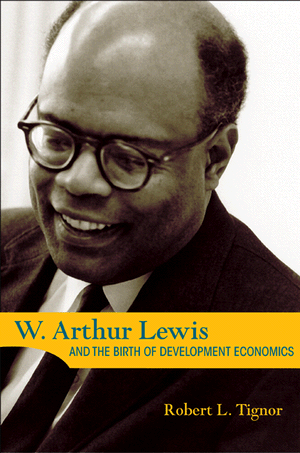
The passage appears in a book on Arthur Lewis entitled "W. Arthur Lewis and the Birth of Development Economics."

Tuesday, May 02, 2006

Desperate Mickey

Hong Kong Disneyland turns out not to be a tourist magnet.

In a bid to attract more visitors, they have tried almost everything. Yes, I mean everything.

They have gotten rid of senior staff (or they quit on their own depending on whether you are looking at the matter from a shareholder or an employee perspective), they have tried issuing new tickets that allow visitors to use the same ticket to enter the venue twice, they have tried to be nice to the unions (yes, the unions) and now they try to be nice to the cab drivers!

Cab drivers, you ask. Yes, cab drivers I answer.

Here is the latest from SCMP:

"The city's 50,000 taxi drivers were invited to join the free ticket promotion in Tung Chung, Susan Chan Shou-san, publicity director of Hong Kong Disneyland, said yesterday."

Read more here.

Sunday, April 30, 2006

Costs of Unanimity

WTO's rules dictate that trade deals have to be approved by all its members. The upside of this decision rule is that nobody gets screwed of course. Unanimity does have its costs however. It generates the possibility of hold-ups.

France is exactly doing this according to this Washington Post story.

Thursday, April 27, 2006

Coase vs Demsetz on Externality

"Yet, Coasean analysis of externalities has been the subject of much
confusion, even disagreement. Demsetz (2003) in particular has
pointed to aspects of the Coase approach that, as a matter of both
economics and of government policy, he finds problematic. As a matter
of economics, Demsetz says, Coase’s focus on transaction costs is
not helpful in resolving questions concerning externalities."

This is from Fred McChesney in the latest issue of the Cato Journal. Read more here.

Bittersweet Tune

Every breath you take, Every change of rate,

Jobs you don't create, While we still stagflate,

I'll be watching you.

Every single day, Bernanke takes my pay,

When growth goes away, inflation will stay,

And I'll be watching you.

And:

Oh can't you see, the Fed's where I should be,

How my poor heart aches, at each mistake you make.

Recall the original song on which the lines above are based? The Police's "Every Breath You Take." Read more here.

Cultural Difference

In today's edition of WSJ, there is a fascinating story about how Americans are climbing up the corporate ladder within the big three Japanese carmarkers. One line caught my eye.

"You get on an airplane and the American will get right to work...We Japanese will watch the movie and drink."

Read the piece here.

Tuesday, April 18, 2006

Conference in Honor of Jack Hirshleifer


A group of renowned economists gathered in March at UCLA to pay their last tributes to UCLA economics professor Jack Hirshleifer. Here is the official website and here is a paper by Harold Demsetz on the development of economics. Professor Hirshleifer passed away in July last year.

Monday, April 17, 2006

Eureka! Or Professor Steven Cheung Got it Right, Again!

In a latest NBER working paper, Yale professor Peter Schott found that:

"China’s export bundle increasingly overlaps with that of more developed countries, rendering it more “sophisticated” than countries with similar relative endowments."

Read the paper here.

Indeed, Professor Steven N.S.Cheung has made similar remarks years ago in his Chinese writings. Hat tip to the Professor Cheung once again for his keen observations on China's economy.

Sunday, April 16, 2006

Free Markets in Japan, Finally!

In the Sunday edition of the NYT, there is a story on growing income gap in Japan amid the economy's continued revival after a decade-long slump. Of course, in the eyes of the NYT, income inequality is a big minus.

"Today, in a country whose view of itself was once captured in the slogan, "100 million, all-middle class society," catchphrases harshly sort people into "winners" and "losers," and describe Japan as a "society of widening disparities.""

What brings about income inequality in the first place?

Shouldn't people who are more productive (in the value-creating sense) get higher rewards than those who are less productive? Unless every one is equally productive, the "100 million, all-middle class society" implies that Japan's labor market is not doing its job.

In other words, growing income inequality in Japan means that markets are finally allowed to work properly in Japan. And what's wrong with that!

Friday, April 14, 2006

One Loser SOE + Another Loser SOE = World Class Enterprise

A plan to merge two government-owned entities, MTR (an underground rail corporation) and KCRC (a railway company), has finally got the green light to go ahead. Read the government press release here.

Funny thing is, commenting on the merger, our head of the government said that "The merger will create a world class Hong Kong railway company and consolidate Hong Kong's status as Asia's World City." Read all of his comments here.

Without any plan for full privatization down the road, how the merged entity (which continued to be a state-owned enterprise albeit a giant one) could be transformed into a "world class concern" is a mystery that even Sherlock Holmes would find it tough to figure out.

And if HK really needs to depend on a giant SOE to consolidate HK's status as Asia's World City, we better call Beijing up and tell them: Beijing, Beijing, we have a serious problem!

Problem down the road as I see it. To placate populists in the legislature, the government will try VERY HARD to lower the prices for both the MTR and KCRC. To avoid losses, the government will further distort the local transportation market through additional restrictions on other modes of transport to compete with the new entity.

If you cannot charge a market price to recoup your fixed costs, you have to increase the number of customers by forcing those people who would not ride on the rail if given another option to become new customers. This is so because the railway business has relatively high fixed costs compared with the marginal costs of serving another passenger.

Wednesday, April 12, 2006

Thomas Friedman: Amateur or Guru?

What makes NYT columnist Thomas Friedman's The World is Flat such a big hit remains a mystery to me....I mean if you want to know about the impacts of globalization, why don't you get a book written by real experts in the field like In Defence of Globalization by J. Bagwatti or Free Trade under Fire by Doug Irwin (who is a student of Bhagwati).

Bagwatti's and Irwin's books are targeted at the general audience so they are written in an accessible language that is free of jargons. If you can get the stuff from the horse's mouth, then why bother with a merchant of second hand ideas like Friedman?

Am I missing something? Does Friedman really has something insightful and important to say on this topic?

Nop, nop, nop...

Read this insightful and negative review of Friedman's book by UCLA trade economist Ed Leamer here.

Quote of the Day

"Warning people about purported free lunches is one reason God put economists on earth."

That's a line from Greg Mankiw's latest post on health care, read it here.

Joe VS Hillary Clinton

Hillary Clinton(HC) : "I think a return to fiscal discipline, living within our means, is essential to our long-term health."

Joe, an Econ 101 student who doesn't use Joe Stiglitz's undergraudate text: That is easy, just ask the government to spend less, waste less and do less.

HC: "It is also critical to whether or not we control our own destiny as a nation. Red-ink fiscal policies will undermine America's competitiveness. We have to ask ourselves whether our taxing and spending policies are in line with our economic goals."

Joe: If she is referring to US as a nation when she mentioned "our economic goals", that is nonsense. For a country, unlike a person, cannot have its own goals. And if she is referring to each and every American citizens, then what she said is nonsense as well. For there is no set of economic policies that would make everybody happy.

HC: "America did not build the greatest economy in the world because we had rich people... We built the greatest economy in the world because we built the American middle class."

JOE: First of all, the market is not something that you build nor create. It emerges. Once you think otherwise, the government will then think that it has the ability to tinker with the operation of the market. Well, if you could create a market, it is only logical for you to have the ability to steer it onto some other path as well.

Second, the operation of the market does not favor any particular class. Yes, not even the middle class. Historically, markets, if unfettered, make the emergence of the middle class possible. But that is different from saying that the market has a bias towards certain class.

If you want to read more on Hillary's thoughts on economic policies, read the Washington Post story here.

Tuesday, April 11, 2006

Civil Society In China

In a story in NYT, it reported on the increasing effectiveness of NGOs in China in fostering the establishment of a civil society and in changing the direction of government policy.

"Officially, there are about 280,000 of them registered in China, an extraordinary number considering there were virtually none as recently as the early 1990's. Some experts estimate there are now two million to eight million such groups, many of them very small and most of them simply ignoring government registration requirements."

Read the whole thing here.

Monday, April 10, 2006

Who will be the Next Vice-chairman of the Fed?

This story in WSJ reported on who are the likely candidates.

James Buchanan Lecture Series


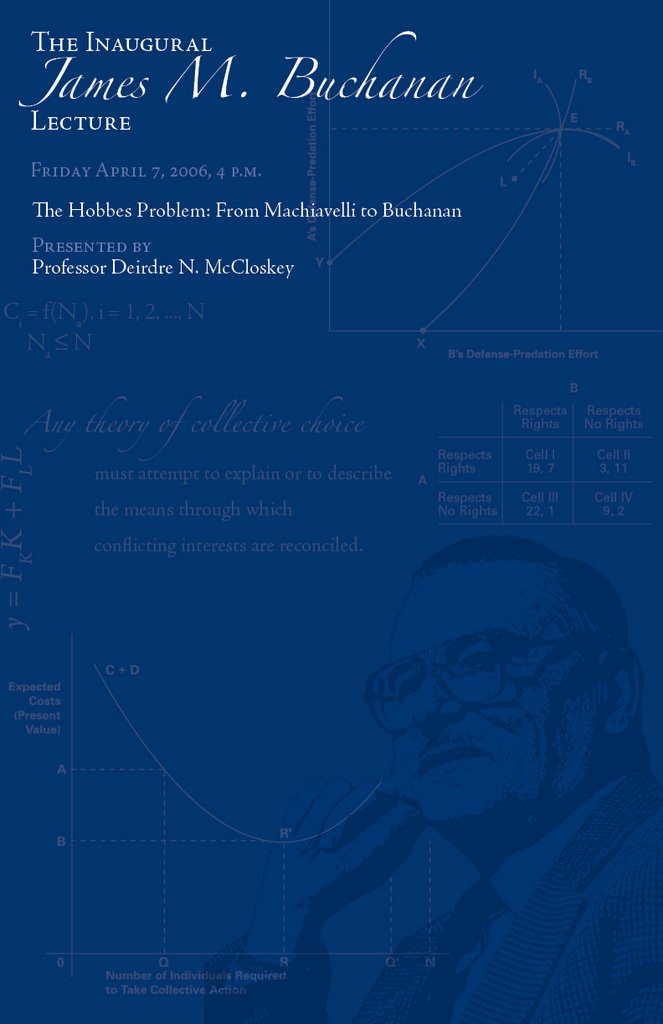
Deirdre McCloskey delivered the inaugural Jim Buchanan Lecture last week. The title of her paper is: The Hobbes Problem: From Machiavelli to Buchanan. HT to Marginal Revolution for the pointer.

Should Government Intervene when Externalities Occur?

A big problem with the argument that goverment action is justified whenver externalities occur in the market is the implicit assumption of the absence of externalities resulting from that very same government action.

That is the bottom line of this very intelligent post on the topic by Jeff Miron, you have got to read it.

Economic Logic: Casualty of Political Calculation

Here is the latest from WSJ, "French President Jacques Chirac, bowing to intense pressure from students and unions, announced plans Monday to replace a contested employment law that triggered massive protests and strikes across France."

Read the whole story here.

Here is what A. De Jasay has to say about Chirac and the recent riots:

"Many observers, including President Chirac, are convinced that the French are ferocious by temperament and must be treated with kid gloves, for if their violence is met by violence, mayhem and civil war will break out and blood will flow in the gutters.

France has one of the world's largest, and very efficient, riot police, the CRS that, however, is hardly ever used in politically sensitive conflicts for fear that worse might ensue. In his 11 years as president, Mr. Chirac has never faced down street crowds and has been especially quick to capitulate when all too necessary school and university reforms were met, as they always were, with protests by students and their teachers."

Read it here.

Saturday, April 08, 2006

We Don't Have Clients; We Have Suspects!

"The US government during the Clinton Administration tried to make various agencies more client friendly. According to anecdote by John Nellis, the response of Customs officials to this initiative was "We don't have clients; we have suspects.""

That is from Bill Easterly's White Man's Burden, and John Nellis is a non-resident fellow at Center for Global Development.

Friday, April 07, 2006

Lords of Poverty


In response to a piece published in Cato Unbound by Bill Easterly, UCLA economist Deepak Lal wrote in response:

"The unpalatable truth for the many well meaning people who are moved by world poverty and want to do something is that, over the years, alleviating world poverty has become a large international business from which a large number of middle class professionals derive a good living.

They have been aptly described by a former East African correspondent of the Economist as the "Lords of Poverty."[2] Easterly's suggestions for making aid effective will merely provide them a new play! The truth is that aid is not only ineffective; it is actually counterproductive. It will be a cruel joke on the Amaretch's of the world if it is now believed that some bureaucratic fix of the aid machinery will get them to school."

Read the whole thing here.


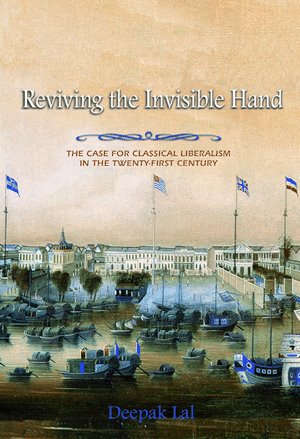
BTW, Lal has a new book that will come out this year on Classical Liberalism. The cover of the book is shown here.

Wednesday, April 05, 2006

Playing For Real

In 1991, Ken Binmore published his excellent game theory text Fun and Games. Since then, readers like me have been waiting anxiously for him to bring this book up-to-date with recent advances in game theory.

Finally, Oxford U Press will publish the revised edition of the text with a new title Playing for Real. Can't wait to see that.

For those who are unaware of it, Ken has a book out last year entitled Natural Justice in which he uses game theory to analyse moral behavior.

Let Them Eat Cake!


In a negative review of Bill Easterly's book The White Man's Burden, World Bank economist Branko Milanovic wrote, "It is somewhat ironic, I think, that Bill Easterly, who has spent a large part of his life working on issues of growth, poverty and inequality in poor countries and whose knowledge and intellectual capacity is second to none, has written a book that, despite his protestation to the contrary, will be used to set back the agenda of poverty alleviation and provides an argument for those who have long argued that the best policy is to do nothing and ignore the poor world. Let them eat cake!"

Read it here and a short summary of Bill's book here.
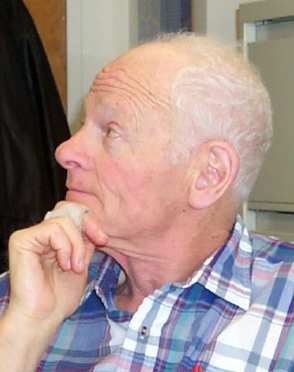
The gentleman in the picture is Bill.

Monday, April 03, 2006

Greg Mankiw on the Austrian School

A student of Greg Mankiw asked him if he has read Human Action by Ludwig Von Mises. Here is his response:

"The truthful, if slightly embarrassing, answer is that I have not read the book. Explaining why may be somewhat edifying, however, so let me reflect on the reasons (not excuses) for my ignorance.First, most economists at research universities focus their attention on recent work. Things written more than twenty or thirty years ago are usually assumed to be irrelevant, out-dated, or incorporated into more recent work. We rarely focus on something like the Mises book (written in 1949) for the same reason that physicists don't read Newton in the original.

Second, at the mainstream schools where I have spent my education and career (Princeton, MIT, and Harvard), the economists of the Austrian school like Mises are often viewed as fringe figures. Rightly or wrongly, they rarely show up on reading lists. I am confident that while I was a student at Princeton and MIT, I was assigned not a single article by an economist in the Austrian tradition.That judgment might well be unfair. Another prominent Austrian economist is Frederic Hayek, who won the Nobel prize in economics. Cognizant of my ignorance of his work, a few years ago I read (and assigned in a Harvard freshman seminar) his classic book The Road to Serfdom. I thought it was terrific." Read the rest of his post here.

In case you are curious, read Human Action for free here.

Greg Mankiw on Outsourcing


Here is Greg Mankiw on Outsourcing and here is his blog which he uses to communicate with his students. Posted above is a picture of Greg, a nice one I would say.

Sunday, April 02, 2006

Yes, it's George Mason again but not about Basketball


A former student at GMU recalled his fond memories of his education at George Mason in this story in WSJ.

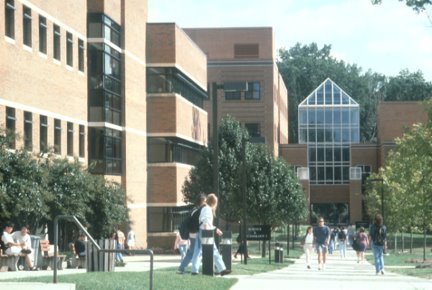
Above is a picture of Enterprise Hall, where the Econ department is located and where I used to have an office with a view of the George's Hall, the site where Center for the Study of Public Choice is located...I sure have good memories of my education as well...GO MASON!


Friday, March 31, 2006

Trade Guru on Immigration

Here is J. Bhagwati's, a Columbia University economist, oped on immigration published in WSJ.

What is Missing in the US's Immigration Debate

The debate on a controversial immigration bill is brewing on the Capitol Hill, read the report here in the Washington Post.

The story said, "A growing body of economic research contends that the recent surge of foreign workers has depressed wages for low-skilled workers, especially for high school dropouts, and has even begun displacing native-born workers. That benefits employers, higher-income consumers and the economy at large, but it may exacerbate the problems of the working class."

The whole issue is framed as a distributional one, employers gain (because of low wages as the supply of unskilled labor surges) at the expense of low-skilled workers.

But let's look at it from another perspective, let's think about the new immigrants would enlarge the size of the US market, and an enlarged market means there are more opportunities for further specialization and division of labor and hence more opportunities for beneficial exchanges are opened up as result.

Jim Buchanan had a nice little book, though not directly addressing the issue of immigration, that touched on the topic of how the enlargement of the market extends the opportunities of specialization and how this will bring fruits to everybody involved.

Thursday, March 30, 2006

Game Theory at B-Schools

WSJ reported that game theory is becoming more and more popular in MBA programs, especially with economists getting Nobels for their contribution to the field. Read the story here.

Indeed, there are several excellent game theory texts that have B-school students as their target customers. The most popular one is doubtless Thinking Strategically written by A. Dixit and Barry Nalebuff. Other important ones include Co-Opetition by Adam Brandenburger and Barry Nalebuff and Games, Strategies and Managers by John McMillan.

George Mason U. in Washington Post and WSJ

After GMU's basket ball team got a spot in NCAA's final 4, GMU suddenly becomes talk of the town.

Read the Washington Post story here and the WSJ story here and here.

Tuesday, March 28, 2006

When Google Goes to Washington

Northwestern University law and economics scholar Fred McChesney wrote a book on how the government, through mere regulatory threats, can solicit rents from businesses back in 1997.

According to professor McChesney, that theory (called rent-extraction theory) explains why we observe less regulations than we would have expected because a credible threat of regulation would be enough to bring about rents without the regulatory threats being actually implemented.

In NYT today, there is a story about how Google has to follow the footpaths of other low-tech firms in building up a strong presence in K street. The story tells another tale of how rent-extraction works in practice. Read the whole thing here.

Monday, March 27, 2006

Price Discrimination in Competitive Markets

"Standard economics has long held that firms can price discriminate only when they have monopoly power. Antitrust authorities and other regulators are thus tempted to use the existence of price discrimination as one indicator that a firm should possibly be subject to government investigation. In this monograph Professor Baumol shows that price discrimination not only exists in competitive markets but sometimes is a crucial feature of them. Baumol concludes by urging regulators to tread carefully when applying theory to policy. "

This is from a monograph written by Bill Baumol, a retired professor at NYU.

Price discrimination in a competitive markets, is that really a "new" discovery?

Professor Steven N.S. Cheung noted as early as 1983 in his What the Tangerine Seller Said, a book of his newspaper columns in Chinese, that his own experience from selling tangerine during the Chinese New Year was that price discrimination was widespread even when your neighboring stores were selling exactly the same things as yours.

Is Democracy a Western Thing ?

This is a question Amartya Sen posed in his WSJ oped, read it here. Sen answered negative to the question.

I am basically in agreement with his argument until he wrote:

"When it is asked whether Western countries can "impose" democracy on the non-Western world, even the language reflects a confusion centering on the idea of "imposition," since it implies a proprietary belief that democracy "belongs" to the West, taking it to be a quintessentially "Western" idea which has originated and flourished exclusively in the West. This is a thoroughly misleading way of understanding the history and the contemporary prospects of democracy."

I beg to differ. To me, "imposition" means something different from what Sen suggested above when applied in the debate on exporting democracy to other non-democratic country.

"Imposing democacy" means introducing democracy to a non-democracy countries without first taking local conditions into account. It is a criticism of the means through which democracy is introduced, not the end it self ie whether democracy should or should not be introduced in the first place.

That is, I suppose, the main lesson that one can draw from Bill Easterly's "The White Man's Burden" as well.

Wednesday, March 22, 2006

Using Legislation to Sabotage Competitors

NYT's David Leonhardt has written a telling tale on how entrenched airlines companies used the law to stifle competition, read it here.

The Costs of Saying No to Capitalism

French youth took to the street to protest free market policies...Washington Post's Steve Pearlstein does not find it so difficult to understand what caused these kids to take to the street to express themselves: The French see the free market as a villain.

"A telling poll released in January by the Program on International Policy Attitudes at the University of Maryland found that only 36 percent of French respondents felt that "the free enterprise system and free market economy" is the best system. That's the lowest response from any of the 22 countries polled and compares with 59 percent in Italy, 65 percent in Germany, 66 percent in Britain and 71 percent in the United States."

Pearlstein also pointed out, correctly I think, the government is to be blamed in causing such riots as well.

"After all, the supposedly center-right government that pushed through the new youth-employment contract is the same government that adamantly refused to give up subsidies for farmers, stepped in to prevent foreign takeovers of French companies and, just last week, demanded that Apple iPods accept music downloads from iTunes competitors (read: French competitors). But having declared, in effect, that markets cannot be trusted to generate socially and politically acceptable outcomes, the same government is now shocked to find that it doesn't have much credibility when it asks workers to trust markets when it comes to the terms of their employment."

But this is the sad part of the story:

"when you ask French university students who is the Bill Gates of France, they look at you blankly. It's not simply that they can't name one. The bigger problem is that they can't imagine why it matters, or why that has anything to do with why they can't find a good job."

Tuesday, March 21, 2006

Incentive Pay for Teachers

"A new pay-for-performance program for Florida's teachers will tie raises and bonuses directly to pupils' standardized-test scores beginning next year, marking the first time a state has so closely linked the wages of individual school personnel to their students' exam results.

The effort, now being adopted by local districts, is viewed as a landmark in the movement to restructure American schools by having them face the same kind of competitive pressures placed on private enterprise, and advocates say it could serve as a national model to replace traditional teacher pay plans that award raises based largely on academic degrees and years of experience.

Gov. Jeb Bush (R) has characterized the new policy, which bases a teacher's pay on improvements in test scores, as a matter of common sense, asking, "What's wrong about paying good teachers more for doing a better job?""

Read the whole thing here.

The story also contained responses from "educators" who said that test scores should not be the sole criterion to judge teachers' performance.

The implicit economics in this claim is this: teachers have to perform many different tasks and their efforts in most cases are difficult to evaluate. So by linking incentives to test scores alone, a relatively good indicator of teachers' efforts and their effectiveness, this claim implies that less efforts will be allocated to those other tasks to the detriment of students.

Will this happen? If efforts and their effectiveness are so difficult to measure in those other tasks (inspiring students say), how can we be so sure that teachers will not slack on those other tasks in the first place before the introduction of the pay for performance scheme? Now that with the incentive scheme, at least we will be quite damn sure that more efforts will be put in those tasks that will improve students' test scores.

Go Mason!

It turns out that George Mason has many other nice things to offer other than economics, law and info tech...

LA Times headline wrote: George Mason Brings Down the Champ. Read it here.

Another story also in the Times has this nice description of George Mason:

George Mason is a relatively new university, founded in 1972 as part of the University of Virginia system. Its original goal was to provide education in subjects of importance to the growing community of government workers in Northern Virginia. It has well-regarded schools of public policy and informational technology. It was mainly a commuter school until about 15 years ago.

But now George Mason is the largest university in the state. It has 29,000 students. It has two Nobel Prize winners in its economics department. It has a groundbreaking department of microbiology.

Constitutional Economics

Victor Vanberg has a new paper on Constitutional Economics, read it here. Vanberg used to teach at George Mason University while I was there.

Monday, March 20, 2006

More on the "White Man's Burden"

In my previous post, I have provided a link to a review of the book "White Man's Burden" by Amartya Sen, here is the response to it by the author Bill Easterly.

Some other book reviews have also been posted by Bill on his website, here is one that appeared on NYT, and another one that appeared on WSJ.

Gordon Tullock on Foreign Policy

Yes, and it seems he is trying to write a book on the topic as well, read Chapter 1 here.

Funny Quote of the Day

Under Communism, the Poles are fond of saying, only the future is certain:

The Past is always changing.

More on the Costs of the Iraq War

Gary Becker and Dick Posner weighed in on the costs of the war on Iraq. Read it here.

It seems the costs on the war on Iraq has become a hot topic. In the lastest issue of the Economist's Voice, there are two pieces on the topic, one by Scott Wallsten with the American Enterprise Institute and one by Joe Stiglitz.

Thursday, March 16, 2006

Thankyou Capitalism

My son, at 4, has almost fully recovered from the surgery he had three days ago.

On top of my wife, who brought him to the hospital that day, I must thank capitalism.

The reason for that is left for the reader as an exercise.

Wednesday, March 15, 2006

Demand Curve for Terrorism Slopes Downward

Washington Post columnist Anne Applebaum has a very good piece on the folly of the US to creat a list of "critical infrastructure" where the items on the list will be offlimits to foriegn investors.

Indeed, though it may appear to be counter-intuitive, the US really ought to encourage foreigners -- especially those who pose potential threats to US security -- to invest in US assets. If that means giving them tax breaks as inducements, such insurance premium would be dirt cheap in comparison with the trillions of dollars being spent on homeland security.

Why?

Things contained in the list are critical assets right? They are designated as critical supposedly because they will be the first targets enemies will pick when they plan to attack the US right?

If that is the case, you should prefer those assets to be owned by the very opponents of the US who are contemplating to attack the US in general and those assets in the list in particular.

Doing so raises the price of attacking those very assets and with demand curve for attack slopes downward, need I say more?

Tuesday, March 14, 2006

Voter Ignorance

In a WSJ article on minimum wage, it cited a poll which finds that "more than 80% of Americans surveyed said they were in favor of "Congress passing legislation that would raise the minimum wage," with only 14% saying they would disagree."

""This issue is so popular among the entire public that Republican voters don't even realize they're supposed to vote against these initiatives," says Kristina Wilfore, executive director of the Ballot Initiative Strategy Center, a left-leaning umbrella group backed by labor unions and financier George Soros."

Read more here.

For an insightful analysis of the consequences of voter ignorance on the operation of democracy, read the paper here and here.

Freakonomics in the Classroom!

It turns that a lot of colleges have adopted Freakonomics as a teaching tool. Now a study guide to help students using the book to navigate through the text is out, yes, there is a study guide for Freakonomics. You can download it here.

Monday, March 13, 2006

Just When You Think India is Ahead of China in R&D

According to a WSJ story, last year China's R&D spending accounted for 1.3 % of GDP. India, the fiscal year ended in March 2005, R&D spending amounted to 0.77 % of GDP.

Read the story here.

The Economcis of War

In the latest NBER working paper, Bob Topel, Kevin Murphy and Steve Davis (all of them with the University of Chicago) find that:

"According to our analysis, pre-invasion views about the likely course of the Iraq intervention imply present value costs for the United States in the range of $100 to $870 billion.

Our estimated present value cost for the containment policy is nearly $300 billion and ranges upward to $700 billion when we account for several risks stressed by national security analysts.

Our analysis also indicates that war and forcible regime change will yield large improvements in the economic well-being of most Iraqis relative to their prospects under the containment policy, and that the Iraqi death toll would likely be greater under containment."

However, in an earlier paper, Nobel Prize winner Joe Stiglitz and his coauthor find it costly/uneconomical to wage the war in Iraq.

Who is right?

The Road to Serfdom, in Cartoon !

Yes, it is the Road to Serfdom written by F. Hayek. Watch the cartoon here.
Hat tip to Marginal Revolution for the pointer!

A Personal Note

Dear Readers of this Blog:

As my son will undergo an eye surgery tomorrow (14 March), I may not be able to update my blog as frequent as I would like. Sorry about that and many thanks for your support and understanding.

Funny Quote of the Day

I got my copy of Bill Easterly's new book last Saturday and have started reading it, so far so good. When I was reading it earlier today, a really funny line caught my eye.

The lack of accountability at the foreign aid agenices, according to Easterly, is just like "the bumper sticker I once saw on an eighteen wheeler: DON'T LIKE MY DRIVING? CALL 1-800-SCREW-YOU."

I have never imagined that economics books can be that funny!

Thursday, March 09, 2006

Experimental Economics

You know experimental economics is gainning wider acceptable among mainstream economists when there are more and more undergraduate/MBA level textbooks coming on to the market.

Here is the latest forthcoming text by UVA's expert in experimental economics Charlie Holt (I think he is Jim Buchanan's student).

The new book will be published by Addison Wesley later this year.

Wednesday, March 08, 2006

More Open Government in China, One Step at A Time

Today's WSJ again has a nice piece on how China's legislature, hitherto viewed as nothing but a rubber stamp has finally changed and become more assertative.

"China's traditionally rubber-stamp legislature is taking on a new role: a target for interest groups to lobby.

With nearly 3,000 delegates gathered in the capital until next week for the annual meeting of the National People's Congress, some representatives of different interest groups have also flocked to Beijing. They have been seeking to win the ears of delegates on the sidelines of the 10-day meeting on issues from tax policy to antidiscrimination measures for hepatitis B carriers...

Delegates -- who meet once a year to rubber stamp the premier's work report, the state budget and any bills that have been teed up -- are also becoming more outspoken in representing their constituencies."

Read the whole thing here. The slow but gradual openning of China's government is one very important reason why I think all those who predict China's pending collapse is wrong, and dead wrong on that.

How Markets Engender China's Freedom of Expression

In today's edition of WSJ, Harvard scholar Merle Goldman has a nice piece on how China's market development engenders freedom of expression there.

"Although China remains an authoritarian Communist party-state, its totalitarian controls have been loosened due to China's opening to the outside world and moves toward the market. As most newspapers lost their government subsidies and had to support themselves, they became more daring and more responsive to their constituencies' concerns in order to attract readers.

In addition, China's exposure to the outside world through business, travel and the Internet has allowed a limited degree of freedom in the personal lives of individuals. Such changes have made a small number of people less fearful and more willing to speak their mind. This new stage of unprecedented boldness may in time help introduce political institutions that can deal more effectively with the urgent problems that China faces today."

Read the whole thing here.

Tuesday, March 07, 2006

Why the US Should Welcome Investors from Middle East

Paul Blustein of the Washington Post wrote:

"Already, the list of U.S. businesses owned by Arab investors -- not just from Dubai -- includes some well-known names. Among them are Caribou Coffee Co., the fast-growing rival to Starbucks Corp.; Church's Chicken, a fast-food concern; Loehmann's, a specialty retailer; TLC Health Care Services Inc., a provider of home nursing and hospice care; and even several financial publications, including the American Banker.

Such "direct" investment in hard assets -- companies, factories and real estate -- is generally preferable for the U.S. economy, in the view of most economists, to foreign investment in bonds, stocks and other financial assets. One advantage of direct investments is that they cannot be dumped in a panic the way that, say, a Treasury bond can...

The main drawback of a direct investment is that it involves foreign control, which can raise national security concerns..."

Read the story here.

The way I see it, far from creating security concerns, direct foreign investment can actually help lower the risk of a foreign attack, whether of the conventional or the terrorist kind. How?

Imagine you were a terrorist, which target you would hit first, a place where you had a lot at stake through investment or a place where you have no personal interests at stake.

An untended consequence of the US welcoming FDI from hostile groups, countries, individuals is that it would raise the likelihood of an attack on other US allies say the Brits.

Monday, March 06, 2006

What Readers Really Want?

David Friedman has written an extremely perceptive post on the media.

"I often use my car's satellite radio to listen to political talk shows. The experience is not encouraging. Most of the content, left and right, amounts to "our side is wise and virtuous, hooray, their side is stupid and evil, boo"...Being nice is less dramatic than being nasty."

Right on. I was for awhile (one year and eight months to be exact) an editorial writer for one of the best selling papers here in HK. One day, my then boss met me in the office and told me what I wrote was boring. I then asked him how I could make my column interesting.

Just yell at your opponents and let them know they were stupid was his reply. I then asked what about logic? To hell with logic responded my then boss. "Who cares about logic? We are not in the business of selling knowledge anyway," said my then boss. All I needed to do, I was told, was to appeal to my readers' emotions.

Weeks later, I quit. David Frideman nicely captures how I feel about the whole thing. As an editorial writer who believes in the free market, I tried to treat people I disagreed "with honestly and sympathetically, conceding the parts of their argument that are correct while disputing the parts that are not." Unfortunately, that style of writing was not what my boss expected from me apparently because such an approach was "less effective...than telling them what idiots they are—especially if most of your listeners are already on your side."

Question: Say if someone already is a believer in free market, why would he or she spend time or money on radio programs, talkshows, and newspaper which provide nothing to him/her other than reaffirming his/her prior beliefs? Or is reaffirmation of his/her prior beliefs all he/she wants in the first place from such media outlets?

Rejuvenator of Urban Economics

Harvard economics professor Ed. Glaeser is featured in this NYT piece.

The best part of the story is when Glaeser recounted on how he got interested in learning economics.

When Glaeser was 10, his mother brought him along to her MBA classes. "Some adults remember fondly the first time they went to a major-league baseball game. Glaeser recalls a revelatory experience as a youngster when his mother sat him down and explained marginal cost pricing."

Hat-tip to Marginal Revolution for the pointer.

Sunday, March 05, 2006

Sen on Easterly

Much has been said about Bill Easterly's new book, "The White Man's Burden: Why the West's Efforts to Aid the Rest Have Done So Much Ill and So Little Good." The book has not come out yet, but here is a book review (only mildly positive) by Amartya Sen in the latest issue of Foreign Affairs.

Tuesday, February 28, 2006

Economic Hit Man Gets Hit!

Who would believe that on top of Freakonomics, Confessions of an Economic Hit Man also made it to the NYT bestselling list!

I have never read the book, but I have read a few write-ups of those who did. His thesis strikes me as nothing but a rehash of the first world exploiting the third world kind of theory. What surprises me is a lot of those reviews that I read, however, tend to give a big thumbs up to the book. Until now that is.

The author of the World's Banker, Washington Post columnist S Mallaby on Monday wrote "
The world, says Perkins, is governed by a shadowy "corporatocracy," an invisible empire of wealth and greed that deploys a combination of bribes, assassins and seductive women to enslave the poorest countries... his account of international finance is itself largely a dream...Even if you believe the stories of seducers and assassins, which other journalists have questioned, Perkins's basic contentions are flat wrong."

Read the whole story here.

Monday, February 27, 2006

Would You Rather be a Dog under Such Circumstances?

"This is a country in which dogs can get a hip replacement in under a week and in which humans can wait two to three years," said Dr. Brian Day.

Guess which country Brian is referring to? Would you rather be a dog than a human under such circumstances? No, no, no this is not a war-torn, corrupt, and underdeveloped nation that is hard to locate on the map...it is

Find out here.

Hat tip to Russell Roberts at Cafe Hayek for the pointer.

Sunday, February 26, 2006

Unintended Consequences of Human Action

"Until he was 40, Hobbes was a talented scholar exhibiting modest originality. Versed in the humanities, he was dissatisfied with his erudition, and had little exposure to the exciting new breakthroughs achieved by Galileo, Kepler and other scientists who were then revolutionizing the scholarly world.

One day, in a library, Hobbes saw a display copy of Euclid's Elements opened to Book I Proposition 47, Pythagoras's theorem. He was so astounded by what he read that he used a profanity that his first biographer, John Aubrey, refused to spell out: " 'By G__' Hobbes swore, 'this is impossible!'." He read on, intrigued. The demonstration referred him to other propositions, and he was soon convinced that the startling theorem was true.

Hobbes was transformed. He began obsessively drawing figures and writing calculations on bed sheets and even on his thigh. His approach to scholarship changed. He began to chastise philosophers of the day for their lack of rigour and for being unduly impressed by their forebearers. Hobbes compared other philosophers unfavourably with mathematicians, who proceeded slowly but surely from "low and humble principles" that everyone understood.

In books such as Leviathan, Hobbes reconstructed political philosophy by establishing clear definitions of terms, then working out implications in an orderly fashion. Pythagoras's theorem had taught him a new way to reason and to present persuasively its fruits."

Read the whole thing here.

Friday, February 24, 2006

Why We Need International Trade Statistics?

Arnold Kling asked in his latest blogpost, "Why do International Trade Statistics Matter?"

The puzzle, as Don Boudreaux's article points out, is that such statistics have minimal economic significance in acutuality. My guess is that international trade statistics matter for the reason why we want to collect them in the first place.

1. Tax (customs duties) may be one reason why government would want to collect such statistics.

2. Some countries may decide that they want to promote certain industries, so they would need international trade statistics to help them implement their industrial policies....saying by taxing certain imports or subsidizing certain exports.

3. Another reason may be related to trade laws and the political system. Say if you have a law in place that allows you to seek help from the government when your industry is harmed by "unfair foreign imports". What you first need to do of course is to collect evidence, and the place to start is of course starting to collect international trade statistics.

Thursday, February 23, 2006

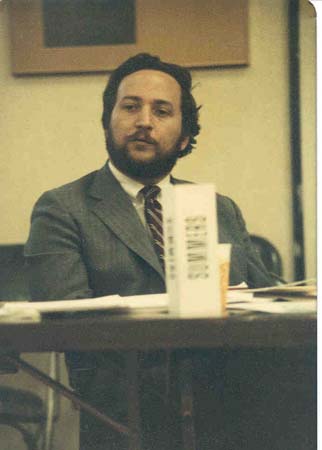
Larry Summers


It is official, Larry Summers will quit his job as Harvard's president.

Read the story in NYT here.

The above picture of Larry was taken in mid 1970s at a Brookings event.

Wednesday, February 22, 2006

The Predicament of Homeschooling

In a series of posts at his blog, David Friedman has made a very strong case for homeschooling, read it here, here and here.

I am all for home schooling. Indeed, I had written several pieces in support of home schooling when I was an editorial writer.

Now I am aware that homeschooling has a potential problem and this problem originates from the signalling theory of education.

No one has said it out loud, but it seems one of the implicit assumptions that the signalling theory needs in order for it to work is that schooling that has to be provided by a formal educational institution. It works like an intermediary between potential employers and empolyees, kind of like the relationship between parties who use the bank as an intermedirary for discharging their obligations involved in transactions. They trust the bank, not each other.
(Question: In the case of education, is this one of the reasons why accredidation is needed?)

Such seems also to be the case for education. Homeschooling changes all this. Will going through the same number of schooling at home be treated as the same as that acquired through formal educational institutions? Will the signal sent through home schooling be credible?

I see two possible solutions to solve this predicatment of homeschooling:

(1) One is that as more and more people switch to home schooling, the market for some sort of certification institution will emerge and it will help distinguish between good homeschoolers and bad ones.

(2) In a way, reputation of the home schoolers' parents are already performing this certification function.

Suppose during an interview you chaired, one candidate told you David Friedman taught him for 15 years at home while the other kid said some guy named Gary Shiu taught her at home for the same number of years, which one would you hire?

Sunday, February 19, 2006

Paul Just Doesn't Get it!

In today's edition of the Hong Kong Standard, commenting on whether the government should cut taxes or not, HK Institute of Certified Public Accountants chairman Paul Chan suggested caution with tax cuts. Read it here.

His argument is that "our economy is sensitive to external factors and greatly influenced by the US and the mainland economies, we must be prudent."

Paul, do you mean that money left in the government's vault can help counteract the influences of these external factors then? If so, why do you think the government is better able to spend our money in counteracting the negative effects of these external factors than we do?

Or, do you mean that these external factors will simply go away as long as money is left in the government's vault rather than in our wallets through tax cuts ?

Robert Fogel on China's Growth Potential

I am not allowed to cite this new paper by Chicago economist and Nobel Laureaute Bob Fogel on China, but it is a nice rebutall for all those Chinese doomsayers out there.

Are Your Interests the Only Thing Stockbrokers Care About?

In a NBER paper, the researchers find evidence that:

" An individual analyst will raise his recommendation proportionally to the recommendation that he expects from other analysts. This is intuitive. A given recommendation does not make senses in isolation, but only relative to the recommendations of other analysts. If no one else in the market is issuing recommendations of “market underperform” or “sell”, an individual analysts may give the wrong signal by issuing such a recommendation even if he believes the recommendation is literally true."

Read the paper here.

This paper is important because:

1) Some economists complain about game theory for its lack of empirical content. A good way to defend the usefulness of game theory, as a tool, is to derive implications from the model, and subject them to rigorous testing. This is what the paper does.

2) If peer pressure leads stock analysts to give similar recommendations about stocks at the same time, and buyers tend to follow analysts' advice in their stock picks, then this may very well be one of reasons for why herding behavior is observed in the stock market.

3) The result lends support to Keynes' famous analogy of the stock market as a beauty contest.

4) Further avenue for research is find out whether there is opinion leader in the stock market and if so, what helps establish the status of an opinion leader and what are the implications of such opinion leaders have for the stock market.

Friday, February 17, 2006

This Blog is Listed !

This blog is listed!

Check this out, before I accidently come across this site, I don't even know this thing exists. I do not bet on becoming rich on this though.

Thursday, February 16, 2006

Professor Steven Cheung and Contract Theory

A reader of my earlier post asked: "it seems you have become a blind-follower of him (here the reader is referring to professor Steven N.S. Cheung). He claim[s] to have invented the contract theory. Apparently, this claim is not shared in the profession."

Is it true that professor Cheung, as this reader claims, is the only person in the world who believes that he is the pioneer of the field contract economics?

Dean Lueck at U of Arizona wrote a paper entitled," Yoram Barzel and the New institutional Economics." On page 3, footnote 6, he wrote: "Indeed Cheung (1969) can lay claim to first possession of the idea that share contracts are designed to tradeoff moral hazard against risk avoidance. Stiglitz (1974) is usually thought to be the first and is most often cited as such."

Cheung (1969)of course refers to his book "A Theory of Share Tenancy." Need I say more?

To Lie or Not to Lie, That is the Question

A friend of mine back in the US once told me, in the job market, everybody lies. What she means is that when potential employees go for an interview, they lie about their experiences and abilities.

If employers are rational, they should be able to realize that employees lie at job interviews and so would adjust their assessments accordingly. That is, they will discount the claims of the potential hires. The problem is: in a job market where everybody lies and employers response accordingly, what happens to somebody who does not lie?

That friend of mine does not lie in job interviews, and she has a tough time finding a good job despite execellent credentials. The reason, I guess, is that if 98% of potential employees lie at job interviews, it is only reasonable for the employers to pursue the strategy of discounting what job interviewees have to say no matter what. Even if my "poor" but honest friend does not lie, still her credentials will be appropriately discounted by her interviewer as well. Her credentials, though impeccable, then do not stand out from the rest after discounting.

So should pooling (ie. telling lies at job interviews if most people do) be a dominant strategy then? Are there efficient mechanisms for employers to figure out who is lying and who is not? (Schooling isn't helpful in this case, because job seekers in my friend's case have all got the same number of years of schooling.)

But then I have known someone who also does not exaggerate his abilities but is doing quite well today. One of my teachers Yeung Wai-hong up at Next magazine told me this funny story the other day indicating how prevalent it is for employees to lie about their abilities (even for those who have been hired).

When he first started out, he was invited to a dinner party where a big name in his field was sitting right next to him. At one point during the dinner, the big name suddenly asked him what he thought Hong Kong's economic growth would be next year. After pausing for a few seconds, slowly but firmly and with confidence, Yeung told the big name he had no idea whatsoever. Later on after the dinner party, a colleague of the big name went up to Yeung and said to him," You are the first person I know who has the guts to admit that he does not know something."

Can we say that Yeung's success can be attributed to his honest strategy then?

I doubt it. I think his case is more of an exception rather than the rule. What do you say?
Theory Without Contracts

Professor Steven N.S. Cheung likes to tell this tale that happened in the late 1960s in his Chinese writings.

At a conference on marine fishing in Vancover, attendants were busy discussing ideas of a presenter right after he finished. Suddenly, somebody standing close by the window with a harbor view said in a loud voice, "Look at that, a fishing boat!" All of a sudden, everbody moved over to the window and watched it.

The professor used the story to make a mockery of those economists who do not know how the real world works. Think about it, a bunch of economists specializing in marine fishing had not seen a fishing boat before that day!

Out of curiosity, I flip through the most recent treatise in a field (contract theory) professor Cheung single-handedly invented in the late 60s in his monumental book "The Theory of Share Tenancy". The name of the treatise is called, surprise, surprise, "Contract Theory,"written by two renowned experts P. Bolton at Princeton and M. Dewatripont at ULB published by MIT press last year.

What I find is shocking:

1) A book more than 700 pages long, neither cited nor analyzed one single contract on planet.

2) There is NO acknowledgement of Cheung's contribution to the field! And yes, "The Theory of Share Tenancy" is not cited in the reference.

What has become of scholarship?

Monday, February 13, 2006

When Milton Friedman Talked, We Listened

Here are some excerpts from an interview with Milton Friedman:

Q : The inflation rate in America as well as globally remains historically low, even as oil prices skyrocket. Why?

Friedman: Inflation is a monetary phenomenon. It is made by or stopped by the central bank. There has been no similar period in history like the last 15 years in which you’ve had little fluctuation in the price level. No matter what else happens, this will maintain as long as the US Federal Reserve maintains strict monetary policy and control of the money supply.

Q: China has registered tremendous growth since 1979 through what might be called a “market Leninist” model, or an “authoritarian free-market system” like the Pinochet government you advised in Chile. Can this model last?
Friedman: No. The same thing will happen in China that happened in Chile. Political freedom will ultimately break out of its shackles. Tiananmen Square was only the first episode. It is headed for a series of Tiananmen Squares. It cannot continue to develop privately and at the same time maintain its authoritarian character politically. It is headed for a clash. Sooner or later, one or the other will give.

If they don’t free up the political side, its economic growth will come to an end—while it is still at a very low level.

The situation is not all bleak. Personal freedom has grown greatly within China, and that will provoke ever more points of conflict between the individual and state. There is a new generation that is educated and travels abroad. It knows firsthand the alternatives out there. So, the authoritarian character is softening somewhat.

Hong Kong is the bellwether. If the Chinese stick to their agreement to let Hong Kong go its own path, then China will also go that way. If they don’t, that is a very bad sign. I’m optimistic.

Read the whole thing here.

Kids, Turn on Your TV, Now!

M. Gentzkow and J. Sharpiro, in their new NBER paper, found that:

"Our preferred point estimate indicates that an additional year of preschool television exposure raises average test scores by about .02 standard deviations...

For reading and general knowledge scores, the positive effects we find are marginally statistically significant, and these effects are largest for children from households where English is not the primary language, for children whose mothers have less than a high school education, and for non-white children."

Kids, press the On button, NOW!

Sunday, February 12, 2006

Do Journalists' Overconfidence in Themselves Leads to Media Bias?

I started reading Nassim Taleb's extremely interesting book "Fooled By Randomness" last week and a line in the book caught my eye.

"Why don't most journalists end up figuring out that they know much less than they think they know?"

Trust me, this characterization of journalists' over confidence in themselves is right on. As an editorial writer for a local paper, I was once questioned why I had to quote Milton Friedman's famous line on inflation because he thought the truth of Friedman's statement (about inflation being a monetary phenomenon) is so elementary that it should be known by anyone without any training in economics! If it is indeed so elementary...then why economists like Friedman and Hayek had to fight so hard in alerting people about the inherent inflationary bias inherent in the then fashionable Keynesian economic policies?

Two thoughts:

1) Unlike journalist, a lot of people are really stupid. They cannot see the wisdom contained in the allegedly elementary proposition of Friedman's, so they have to be convinced many times before they can understand that excessive money causes inflation. A related question is: Are the smart people self-select to become journalists?


2) Journalists are just like everybody else. They just think they know more than they actually do as the line quoted above said.

Personally, I think no.2 is very likely to be the reality. And I believe that overconfience on the part of journalists, who think they are better than others, who think they are out there to change the world, is at least one of the major reasons leading to liberal bias in the media.

Thursday, February 09, 2006

Milton Friedman and Modern Macroeconomics

David Laidler, retired professor at the University of Western Ontario and a famous historian of economic thought has recently written a pair of papers on the evolution of macroeconomics. Both are well worth your time in reading them. Enjoy!

The first one is called, "Milton Friedman and the Evolution of Modern Macroeconomics" and the second one is called, "Keynes and the Birth of Modern Macroeconomics."

Tuesday, February 07, 2006

What's Wrong with Conventional Mode of Education?

David Friedman wrote:

"One of the assumptions built into the conventional version of K-12 schooling, private and public, is that there is some subset of human knowledge, large enough to occupy most of twelve years of school, that everyone needs to know. That assumption is false. There is a very short list of skills–reading, writing or typing, and simple arithmetic are the only ones that occur to me–that almost everyone will find worth learning. Beyond that, education involves learning things, but not any particular things. The standard curriculum is for the most part an arbitrary list of what happens to be in fashion–the subjects everyone is required to pretend to learn."

"One observed result is that most children regard education as unpleasant work, to be avoided when possible. Another is that schools spend six years teaching things–arithmetic, say–that the average kid could learn in a year or two. If he wanted to. A third is that we end up with high school graduates many, perhaps a majority, of whom do not actually know many of the things they have spent all those years pretending to learn."

Read the post here.

In public school, the educational bureaucracy imposes the curriculum from above. Hence, the choice of curriculum is made to fit the interests of the bureaucrats rather than the needs of the students. So while the curriculum may make little sense to the students and their parents, hence abitrary as Dave said, it has an internal logic of its own if one looks at the curriculum from the perspective of the bureaucrats.

What about private schools or schools funded through a voucher system, does Dave's comment apply with equal force? What if the whole point of going to school is not to learn something useful, as Dave seems to think it should, but is simply a way of sending a signal.

Incidentally, there is a debate going on at Econlog on whether education is simply a signal, read the relevant post here.

Monday, February 06, 2006

Just When You Think Beauty is Skin Deep

Here is what a new NBER paper said about the impact of beauty on criminal behavior:

Using data from three waves of Add Health we find that being very attractive reduces a young adult's (ages 18-26) propensity for criminal activity and being unattractive increases it for a number of crimes, ranging from burglary to selling drugs. A variety of tests demonstrate that this result is not because beauty is acting as a proxy for socio-economic status. Being very attractive is also positively associated adult vocabulary test scores, which suggests the possibility that beauty may have an impact on human capital formation...

These results suggest two handicaps faced by unattractive individuals. First, a labor market penalty provides a direct incentive for unattractive individuals toward criminal activity. Second, the level of beauty in high school has an effect on criminal propensity 7-8 years later, which seems to be due to the impact of the level of beauty in high school on human capital formation, although this second avenue seems to be effective for females only.

Read the paper here.

Sunday, February 05, 2006

Moral Dilemma

You encounter a handicapped little boy/girl on the street asking for money, and you know as a fact that some parents deliberately have their children's limps chopped off in order to make it more credible that their children deserve your charity.

Choices open to you:

Option one

You give some money to the kid but at the risk of providing help to someone who does not deserve it in the first place. Worse, you may unintentionally encourage more parents to chop off their kids' limps to make a living! (Kind of like the Type II error in statistics)


Option two

You refuse to give money to the kid but at the risk of failing to help someone who really can use some assistance, say the kid lost his/her limps in a car accident. (Kind of like the Type I error in statistics).


Sad fact: the above scenario is not a fake one but one can easily encounter while walking on a busy street in Hong Kong.

What would you do?

Thursday, February 02, 2006

Principled Agents? The Political Economy of Good Government

The title of this post is the name of a forthcoming book by Tim Besley at the London School of Economics. The book manuscript is available here.

Wednesday, February 01, 2006

The Common Factor that Powers Growth in China and India

China's growth miracle has long been explained by economists as the product of a decentralization reform strategy (in terms of the devolution of economic decision making power, not political authority, to the lower level of governments), read a good overview of this thesis here and here.

What I do not know, until now that is, is that the same reform strategy also characterizes India's reform strategy. Read this brand new working paper by Raghuram Rajan and his coauthors from the IMF and find out more yourself.

Tuesday, January 31, 2006

Is Too Much Capital in the Hands of the Chinese Government?

Arnold Kling at Econblog wrote:

"At lunch last week, Tyler Cowen and I both expressed pessimism about China. Our view is that the state appears to control too much capital." Read the whole thing here.

If one just looks at the amount of savings in the vaults of the 4 largest state-owned banks (the funds of course are owned by the public but the presumption is that the state-banks still are not motivated to allocate the capital to the most valued uses), the capital embodied in state-owned enterprises and the forex reserves in the hands of the Chinese government, the above statement made by Cowen and Kling made a lot of sense. But they forget the other side of the coin, the amount of capital that is not controlled by the government.

Indeed, private entrepreneurs in China rely heavily on informal financial institutions for their working and start-up capital. John Hopkins scholar Kellee Tsai is an expert in this area, read her paper here and you may also want to get her book on the same topic.

There is no denying that the capital now in the government's hands is a contraint on growth, but it has been that way ever since reform started in 1978 and this fact has not prevented the 9% annual average growth rate for the past two decades from happening. In other words, growth in China has occured for the two decades since reform despite the fact that the government has a lot of capital in its hands. And with the listing of the state banks on the capital market, the situation will certainly improve in the future.

Tuesday, January 24, 2006

Sir John Cowperthwaite 1915-2006

I am deeply saddened by a story in today's edition of South China Morning Post:

"Sir John Cowperthwaite, the former financial secretary credited with launching Hong Kong's economic success by introducing laissez-faire government, has died in Scotland."

It is no exaggeration to say that Sir John singled-handedly laid the foundations for a free market economy here in Hong Kong. It is depressing to see Hong Kong officials betraying his memory by slowly but steadily taking apart the very foundation that Sir John laid. A slew of interventionlist policies that are already in the pipeline include sales tax, anti-trust law, minimum wage, maximum hours...

Milton Friedman recalled in 1997:

I met Cowperthwaite in 1963 on my next visit to Hong Kong. I remember asking him about the paucity of statistics. He answered, “If I let them compute those statistics, they’ll want to use them for planning.’’ How wise!

Economics of Tipping

Tipping has long been a puzzle to economist.

In a forthcoming article in Southern Economic Journal, Ofer Azar provides yet another attempt to solve this puzzle:

Here is the abstract:

This article examines the optimal choice of monitoring intensity when workers face external incentives (incentives that are not provided by the firm), such as tips, satisfaction from working well, or the desire to build reputation in order to be more attractive to other employers. Increase in such external incentives reduces optimal monitoring intensity but nevertheless increases effort and profits unambiguously. The model explains why U.S. firms supported the establishment of tipping in the late 19th century but raises the possibility that European firms make costly mistakes by replacing tips with service charges.

Sunday, January 22, 2006

Time for China to have an Open Government?

A story in New York Times wrote "Land grabs by officials eager to cash in on China's booming economy are provoking mass unrest in the countryside and amount to a "historic error" that could threaten national stability, Prime Minister Wen Jiabao said in comments published Friday...Local officials operate with impunity in the one-party state and have little to fear from a legal system that answers to the party. " Read the story here.

To preserve social stability, what can the central government do?

1) The central government can of course organize internal clean-up campaign in a bid to get rid of bad elements (read corrupt officials). But the government seems to have tried this route many, many times and this does not seem to work very effectively.

2) Of course, with piles of Forex in its treasury and decent fiscal health, the central government can simply use money to compensate the victims, then again this method can only be a short term solution because it can only rectify old problems but not stopping new ones from occuring. Indeed, knowing that central government will clean up their mess, this policy will only encourage more of such corrupt behavior on the part of local officials (moral hazard).

This method has another problem as well. You need someone to give the money to the victims don't you? And whom you are going to rely on? Corrupt local officials who make a mess in the first place!

3) If the central government cannot deal with its own corrupt local officials, can it simply use force to silence those angry victims of government policies? No. Again, knowing that the central government will clean up their mess (like option 2, only this time with sticks rather than carrots), the same moral hazard problem will occur and future protests are bound to come up again and again.

4) An open government(by that I do not mean democracy but a govenment characterized by rule of law and protection of individual liberty). You can't use force (at least not in a scale comparable to that used in June 1989), you can't trust your own people to rein in their own behavior (they are corrupt and are thus the source of the problem in the first place), what else can you do other than opening up your government?

May be I am too optimistic, but I just don't see China's central authority has that many choices open to them other than opening up the government. Hopefully we don't need to wait for too long.

Thursday, January 19, 2006

New Studies on Democracy and Growth

Two more important new papers on the relationship between democracy and growth are out. One is called "Democracy and Development: The Devil in the Details" by T. Persson and G. Tabellini (forthcoming in the American Economic Review), and the other one is called "Economic Development and Democracy: A Perspective on Recent Research" by James Robinson at Harvard.

Show me the money, Comrades!

In today's South China Morning Post, a story said that the Chinese government has decided to spend a lot of money in a bid to revive Marxism. Read the story here.

Two thoughts:

1) The fact that the central government has to use monetary incentives rather than resorting to the old way of launching some sort of violent campaign to make more people learn Marxism tells us how much China has improved in terms of individual liberty (albeit still limited) since reform started more than 2 decades ago.

2) Market reform means Chinese people are becoming less and less dependent on the government for their livelihoods. People's views on the role of the government necessarily change as a result. Now Chinese people see the government more as the source of trouble(corruption, regulatory burden, and a defective legal system) that limit their opporunities than their source of welfare or income as in the past. The government's legitimacy crisis follows. The bid to revive Marxism is an attempt on the part of Chinese leadership to deal with this legitimacy crisis. Will it work? Not in a million years!

Tuesday, January 17, 2006

Why accountants care about Hong Kong's fiscal health?

A partner at PricewaterhouseCoopers was cited by the Hong Kong Standard as saying that GST will help stabilize government revenues against economic fluctuations and broaden the tax base, read the story here.

A puzzle that has to be resolved is why accountants in HK care so much about Hong Kong's fiscal health than say the local economists. That is certainly not the case in the US and the question is why?

I do not have the full answer, but I know this bit:

1) Accountants are out looking after their own interests, not HK's. So their eagerness to see GST introduced in HK may have something to do with their personal interests. For instance, GST may serve as a new source of income for accountants as businesses may need their help in filing tax forms.

Accountants can claim their private interests are not at stake when they come out in support of GST only if they can credibly commit that they will not do any GST related business. The keyword here is "credible". This can be achieved through posting a bond (say a few millions dollars or whatever discounted future income streams that are expected from GST related business plus a bit more) that will get confiscated once the accountants break their promises and conduct GST related businesses. I dare HK's accountants to do just that to prove their innocence.

And here is my conjecture:

2) In the US, with a mature democracy, lobbying is far more institutionalized than is the case in Hong Kong. In that case, accountants as a group do not need to come out and say what taxes they like or they don't like. If they want to lobby for a tax that will bring new source of income, they will simply call up their lobbyist in Washington DC.

This is not so in Hong Kong. Accountants only have one representative in HK's 60-member legislature and lobbyist as a profession is not as well developed here as in the US. Under such circumstances, accountants may then need to speak out for their favourite pork-barrel policies in the public.

Saturday, January 14, 2006

Median Voter

In responding to a law passed at the Maryland legislature that requires Wal-mart to raise its spending on employee health care, Arnold Kling at Econlog wrote:

"Economics says that ultimately this will reduce the wage income of low-skilled workers in Maryland. That is, Wal-Mart is not going to suddenly increase compensation for low-skilled workers. It either has to cut wages, cut hiring, or both.

How can the state of Maryland justify this interference with how Wal-Mart chooses to compensate workers?

1. The legislators may believe that they know better than workers what is good for them." Read the post here.

My response is, what about the role of voters here? Afterall, aren't legislators' actions merely a reflection of what their voters want? So Arnold's justification no.1 cited above may be rephrased as follows.

The voters may believe that they know better than Walmart employees what is good for them.

Implications:

1. This may imply that the median voter does not work for Walmart. For if he does work for Walmart, presumably he will not support a restriction on freedom of contract that will harm himself. The median voter may even think that he has done a good job in helping push for a law that will improve the welfare of unskilled workers (expressive voting?).

2. Voters are stupid. That is to say even if the median worker does work for Walmart, not equipped with the knowledge of economics, he may mistakenly believe that by asking the government to press for Walmart to raise its medical spending, Walmart will not do anything to offset this and his overall compensation package will indeed rise.

Thursday, January 12, 2006

A Conceptual Framework for Understanding Recorded Human History

The title of this post is the same as the title of a paper by Douglas North coauthored with Barry Weingast at Stanford and John Wallis at U of Maryland. As I am not allowed to cite the paper without their permission, read it here, it is stimulating.

Trade Off

In a WSJ story today, the authors reported that one consequence of the widespread adoption of just-in-time inventory management is the low stock level of medicine. The authors consider the current stock level of medicine as insufficient in view of the risk of the possible outbreak of a flu pandemic, read it here.

The criticism is flawed, in my view, because the authors pretty much assume scarcity away in their criticism of the just-in-time inventory. Yes, of course we can have as many stockpiles of medicine as we want. But in a world of scarcity, the nagging question reappears: at what costs?
Resources used up in the production of medicine imply there are less resources that can be used in other things that we value (say building whatever is needed in Lousiana that could help it withstand another hurricane like Katrina better). As in everything in life, we have to make tradeoffs. And medicine is no exception.

Near the end of the story, an emergency physician made a similar point, "You can't plan for a surge capacity in an emergency room of 500 or 1,000 patients from the 20 you see in a day...Nobody could afford to do that. You can't have 10 doctors and 100 nurses sitting around waiting for something to happen."

Tuesday, January 10, 2006

Hong Kong Fact of the Day

What follows is from a story in Hong Kong Economic Journal, a local financial paper (sorry no link):

In fiscal year 1995-1996, government expenditure on social welfare was HK $ 12.6 billion.

Ten years later in fiscal year 2005-2006, the same expenditure is expected to be at HK $ 34.3 billion.

Do I need to say more?

Fatal Conceit

Our Financial Secretary Henry Tang is always funny, he never fails to entertain. Here is the last installment:

Reporter: Many economists say there is room for marginal tax cuts for the Hong Kong Government, ... everything is turning fine and we don't expect there will be a huge deficit, how well do you agree with them?

Financial Secretary: We must not be too shortsighted. I know while Hong Kong is recovering and is enjoying a fairly robust economic growth, hopefully and likely for a second consecutive year, but we must take a broader perspective and be more macro in terms of what are the external economic factors that may affect us, what are the internal structural healthiness of our economy, and thirdly how to address some of the wishes of our people. I think I will have to address the need of the people and at the same time take a prudent financial management approach. So I will have to strike a balance and I will announce whatever measures I have on February 22.

Read the whole thing here.

What's funny about his answer? Well, he mentioned that the government "must take a broader perspective and be more macro in terms of what are the external economic factors that may affect us..."

The fact is NEITHER him nor anyone, I mean no one, in the government will be able to figure out what the Financial Secretary claimed that could be done in that passage quoted above. Indeed, even individual market participant who is in a far better position to learn about the market conditions than government officials does not have access to that kind of knowledge mentioned in the Financial Secretary's quote. Hayek mentioned back in 1945 that knoweldge is dispersed and the very existence of the market is to help us solve the dispersed knowledge problem effectively.


Another funny thing about his answer is this, in the quote above he said "and thirdly how to address some of the wishes of our people." Why Hong Kong people's wishes need to be addressed by him, why can't they figure it all out all by themselves? Afterall, they are not his children and why we need him to take care of them?

Why a government with a dollar in its hand (extracted through taxation) can figure out a better way to satisfy a person's wishes (from which the dollar is taken through taxation) than a dollar in his/her own wallet? How does the government find out what the person wants?

Monday, January 09, 2006

Let them compete!

China's securities-market regulator yesterday published rules to enforce risk controls in the brokerage sector, and its top official indicated that foreign companies may find it difficult to invest in local brokerage firms until overhaul of the sector is finished.

"The securities sector is undergoing cleanup now and during the cleanup period, there are some practical difficulties for foreign investors to take stakes in restructuring local brokerages," China Securities Regulatory Commission Chairman Shang Fulin was quoted by the official Shanghai Securities Journal as saying.

That is from a story in WSJ, read it here.

Question: Shouldn't competition through opening up of the sector to both foreign and local entries be one of the main pillars, if not the only pillar, of the clean up process?

Chairman Shang should consult this book on the benefits of financial liberalization.

Armen Alchian on Evolution, Information and Cost

Three themes unify Armen Alchian's work on economics. Together, they outline both a coherent methodology for doing economics, and a view of the world that celebrates the importance of individual liberty.

Theme no.1: For Alchian, the unit of analysis is always the individual; hence, the theory must be consistent with each person acting as an individual utility or wealth maximizer.

Theme no.2: Economic theory must be as general as possible. It must apply to both sides of the market, to markets for all types of goods and services, and to the decisions of all economic agents.

Theme no. 3: Finally, both theory and theorist are constrained, indeed governed, by the facts. Rather than the other way around, theory must always confront and conform to the facts. The theory must yield refutable implications.

This is from a paper by Clemson University's Daniel Benjamin, read it here.

For those of us who are familiar with Professor Steven N.S. Cheung's work, we will not fail to notice the close affinities between the two professors' views on economics. Afterall, Professor Cheung wrote his path-breaking doctoral thesis, The Theory of Share Tenancy, under Professor Alchain!

Thursday, January 05, 2006

Dumb Luck!

Arnold Kling at Econlog wrote:

"...If institutions are important, then this raises questions about how institutions get to be what they are. Are there strategies for achieving institutional reform, including ending corruption or strengthening property rights? Can institutions change suddenly, or do they evolve gradually? Why are we fortunate enough to have institutions that are conducive to growth, while other societies are stuck with dysfunctional institutions?"

Economists certainly know far more about how institutions perform once they are there already than how they come about in the first place. This is why it is so dangersous, in my view, for economists to give advice to countries that are underdeveloped.

These economists know almost nothing about how the relatively well functioning institutions come about, they only know some institutions once in existence (well defined and enforced property rights, relatively free media, check and balances in the political system) can generate good outcomes. Equipped with such extremely narrow and limited knowledge, they then tour around the world and give advice to underdeveloped countries. Needless to say, knowing how existing institutions function is a very different kind of knowledge from knowing how to bring about good institutions. And the record of economists in helping underdeveloped countries grow is dismal, I am afraid.

As to Arnold's question on why some countries have institutions that are conducive to economic development, while others are stuck in bad institutions, my answer is simple: DUMB LUCK!


I will write more on this topic...

A Bridge Too Many!

Today's edition of The Hong Kong Standard has a story on an economist's forecast of Hong Kong's economic growth this year.

"As exports and consumer demand weaken in the latter part of this year, future growth momentum needs to come from increased land and construction investments, which have lagged the rest of the economy in the past few years," said Alan Siu, associate professor at the university's school of economics and finance.

What should then be done to prop up growth?

"Siu said the government needs to approve big-ticket infrastructure projects such as the West Kowloon Cultural District and the Hong Kong-Zhuhai-Macau bridge."

So professor Siu thinks that prime-pumping is the way to go in order for Hong Kong to maintain its growth momentum. Hmmm, if promoting growth is indeed so easy, Japan's economy should have recoverd long ago after so many years of massive government spending.

Guess professor Siu has never read stuff written by Frederic Bastiat, who in 1848 wrote:

"[P]ublic spending is always a substitute for private spending, and that consequently it may well support one worker in place of another but adds nothing to the lot of the working class taken as a whole." (Italics in Original)

That is from Bastiat's What is Seen and What is Not Seen.

Tuesday, January 03, 2006

Government Cannot Eradicate Scarcity

In today's South China Morning Post, a story reports that:

"Florists in the popular Mongkok Flower Market have called on the government to help them survive rent increases of up to 60 per cent."

What happens is that the market judges selling flowers no longer is a good idea in the shops now occupied by the florists. What's wrong with that?

Afterall, the visible hand cannot eradicate land scarcity, which is one of the underlying forces which drive up rents in the first place.

Hayek vs Stiglitz: Who is Right?

I was re-reading Hayek's 1945 piece, "The Use of Knowledge in Society" a couple of days ago.

As I understand it, one of Hayek's main messages in that piece is that due to the dispersed nature of certain kinds of knowledge (knowledge of particular time and circumstances), market is the best institution (compared with other known alternatives of course) humans have stumbled upon to help them utilize such knowledge in productive ways.

If so, then how should we reconcile Hayek's insight with what people like G. Akerlof and Joe Stiglitz, have argued: dispersed knowledge (or in their terms information asymmetry) is the source of market failure!

How can markets deal with the problem of dispersed knowledge effectively in one case (Hayek's view) and fail to deal with the same problem in the other (Akerlof's and Stiglitz's view)?

Comments are open.